
Why Legacy Modernization Is No Longer Optional — It’s a Business Survival Decision
Introduction: The Question Has Changed
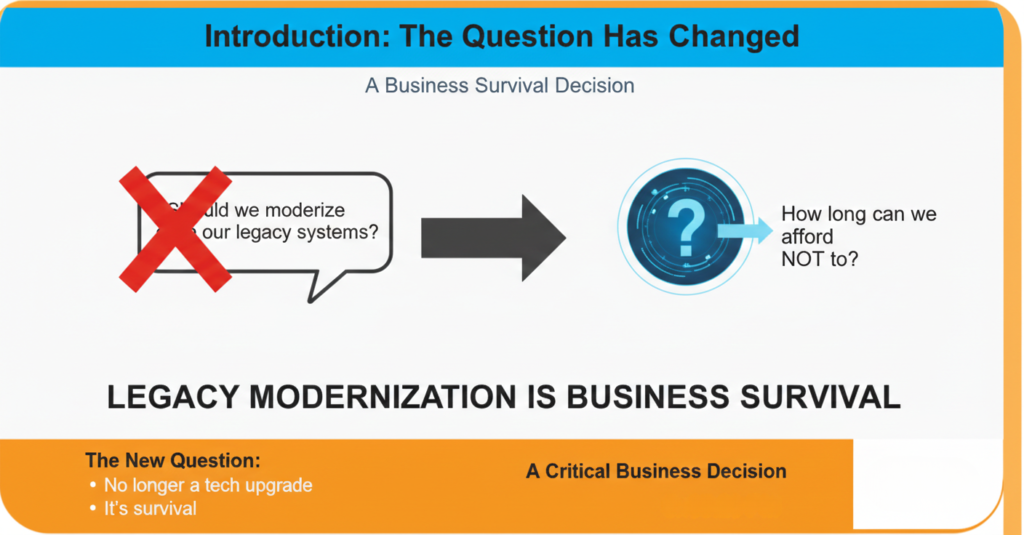
Earlier, businesses asked:
“Should we modernize our legacy systems?”
Today, the real question is:
“How long can we afford NOT to?”
Legacy modernization is no longer a technology upgrade —
it is a business survival decision.
What Legacy Systems Are Costing You (Silently)
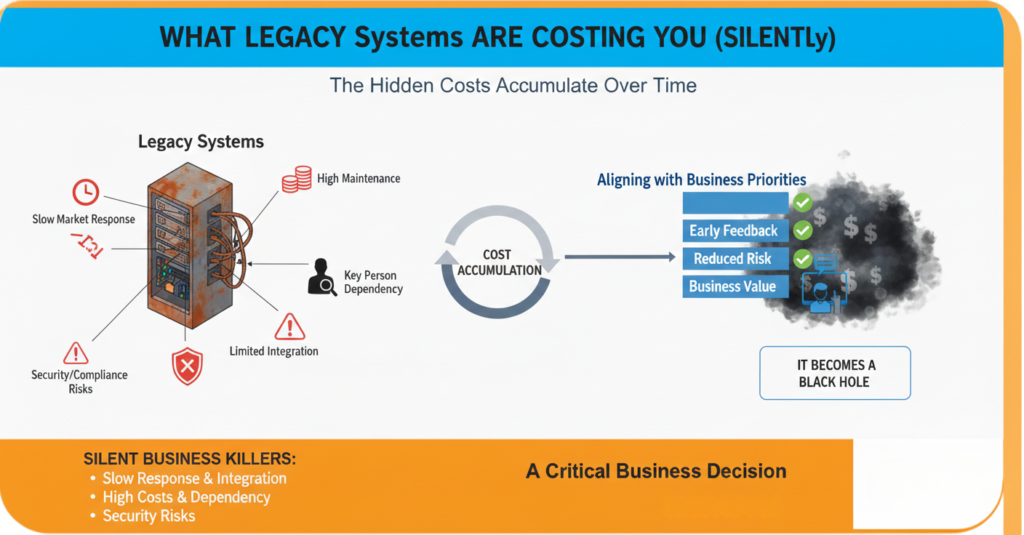
Legacy systems often appear stable, but beneath the surface they create:
Slow response to market change
High maintenance costs
Dependency on few key people
Limited integration with modern tools
Security and compliance risks
These costs don’t show up on one invoice —
they accumulate over time.
Customer Expectations Have Changed
Your customers now expect:
Faster service
Digital experiences
Real‑time data
Seamless integrations
Legacy systems struggle to support:
Mobile access
APIs
Automation
Analytics
The gap between expectation and capability keeps growing.
Operational Risk Is Increasing
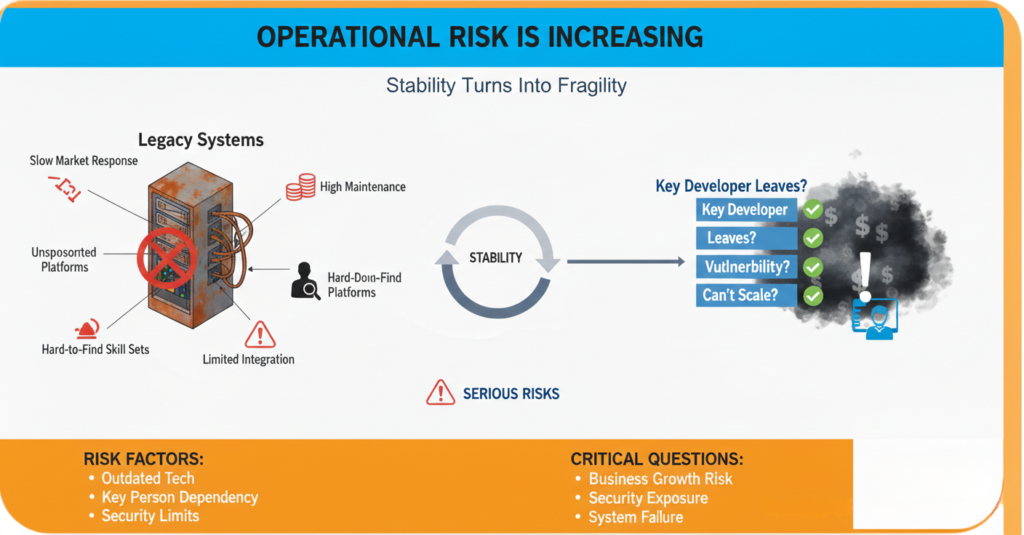
Many legacy systems depend on:
Outdated frameworks
Unsupported platforms
Hard‑to‑find skill sets
This creates serious risks:
What if a key developer leaves?
What if a security vulnerability appears?
What if the system can’t scale when the business grows?
At some point, stability turns into fragility.
Modernization Is About Business Agility
Modernization is not about chasing new tech.
It is about:
Faster decision‑making
Safer change
Easier scaling
Lower long‑term cost
Better customer experience
Modern systems allow the business to move with confidence, not fear.
Why Waiting Makes It Worse
Delaying modernization often leads to:
Higher future migration cost
More tightly coupled systems
Increased technical debt
Forced, reactive modernization
Planned modernization is always cheaper than emergency modernization.
SOAR’s Philosophy
At SOAR Technologies, we believe:
Modernization should be incremental
Business continuity must come first
Core business logic must be preserved
Technology should enable growth, not block it
We modernize without disrupting your business.
Who This Blog Is For
This blog is for:
Business owners running mission‑critical legacy systems
CTOs balancing risk and innovation
Leaders planning the next 5–10 years of growth