
Why Legacy Applications Were Built the Way They Were — And Why That Still Makes Sense
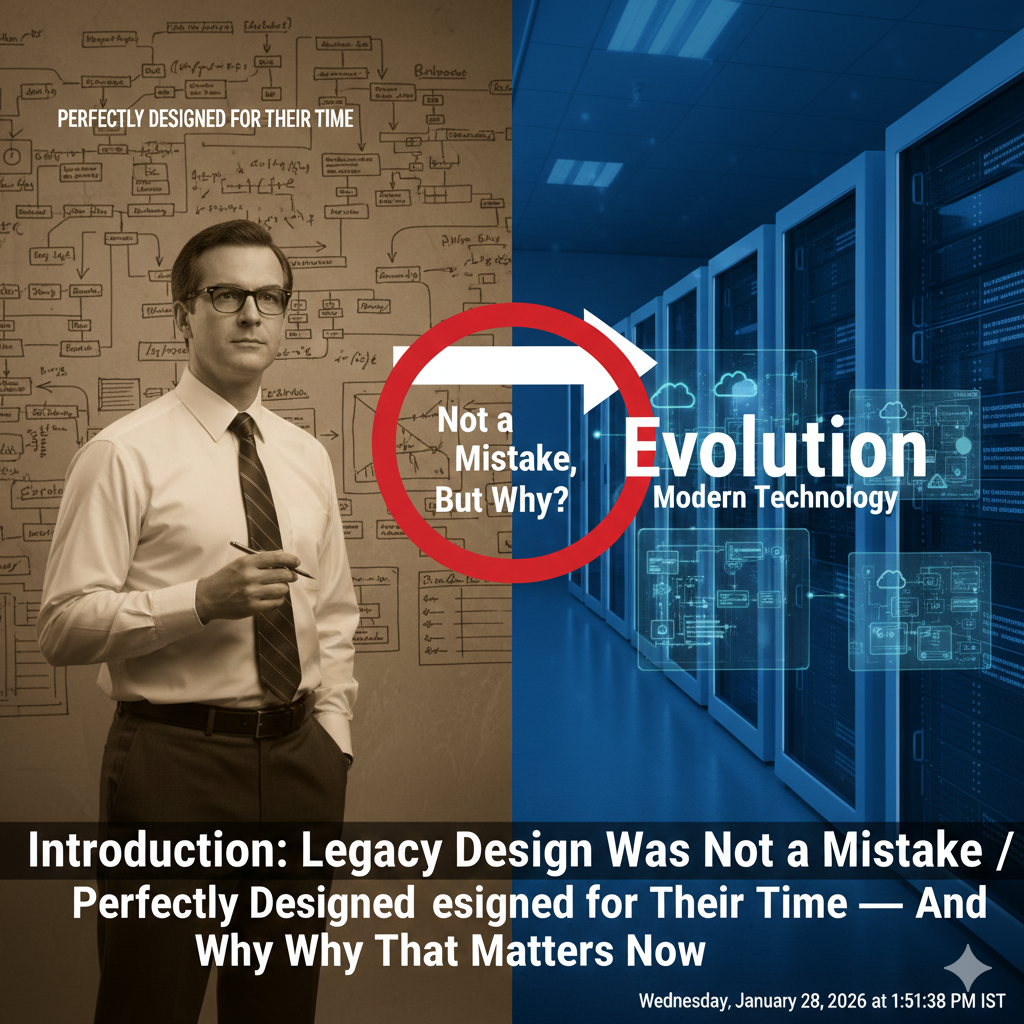
Introduction: Legacy Design Was Not a Mistake
Many people look at legacy systems and say:
“This architecture is outdated.”
But legacy applications were not poorly designed —
they were perfectly designed for their time.
To modernize successfully, we must first understand why they were built this way.
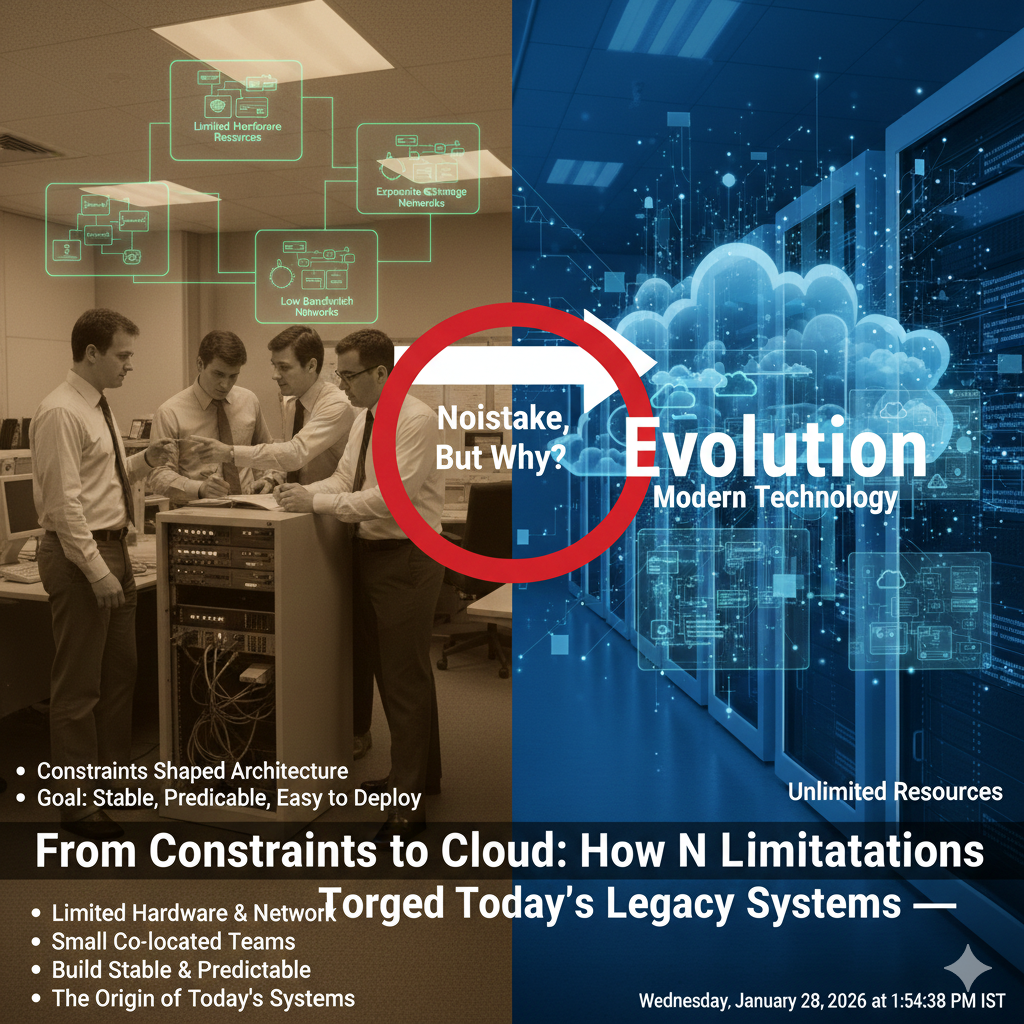
Constraints Shaped Architecture
When most legacy systems were created, developers worked with:
Limited hardware resources
Single or small on‑premise servers
Expensive storage
Low bandwidth networks
Small, co‑located teams
The goal was simple:
Build something stable, predictable, and easy to deploy.
Monolith Was the Right Choice
Monolithic applications offered:
Simple deployment
Centralized logic
Easier debugging
Lower infrastructure cost
For businesses, this meant:
One system
One database
One deployment
One point of control
That simplicity is why many monoliths survived 10–20 years.
3‑Tier Architecture: A Big Step Forward
As systems grew, applications evolved into:
Presentation layer
Business logic layer
Data layer
This brought:
Better separation of concerns
Easier maintenance
Team specialization
For a long time, 3‑tier architecture was best practice.
And in many enterprises, it still runs core operations today.
What Changed (Not the Software — the World)
The problem is not legacy architecture.
The problem is that business expectations changed.
Today, systems must support:
Cloud scalability
Continuous deployments
API integrations
Mobile & partner access
Faster business change
Legacy architectures were never designed for this pace.
Why “Rewrite Everything” Fails
Many modernization projects fail because they:
Ignore existing business logic
Underestimate system complexity
Replace instead of refactor
Break workflows users depend on
Years of operational knowledge cannot be recreated from requirements documents alone.
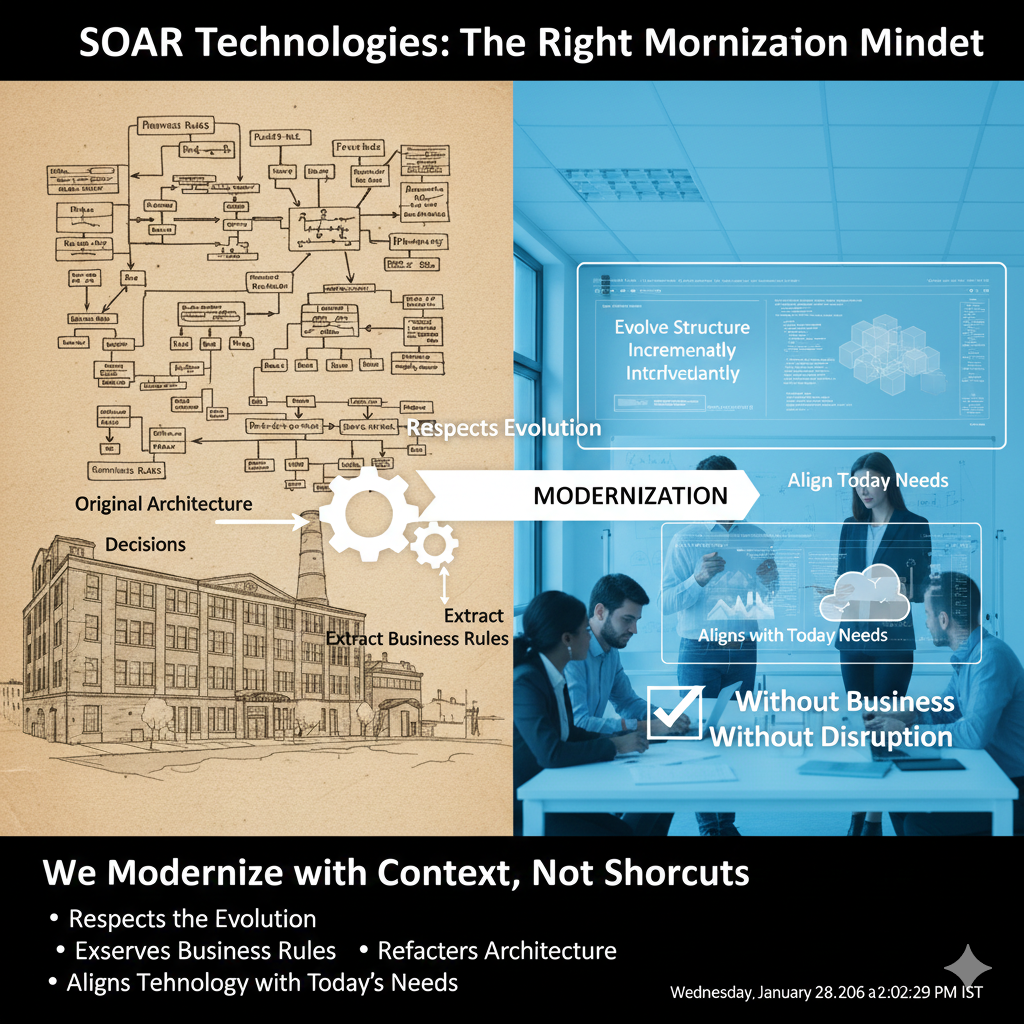
The Right Modernization Mindset
Successful modernization:
Respects original architecture decisions
Extracts and preserves business rules
Evolves structure incrementally
Aligns technology with today’s needs
At SOAR Technologies, we modernize with context, not shortcuts.
Who This Blog Is For
This blog is for:
CTOs and IT heads managing legacy systems
Business owners afraid of “big‑bang rewrites”
Organizations planning safe, phased modernization