
Why Documentation‑First Modernization Is the Safest Way to Transform Legacy Systems
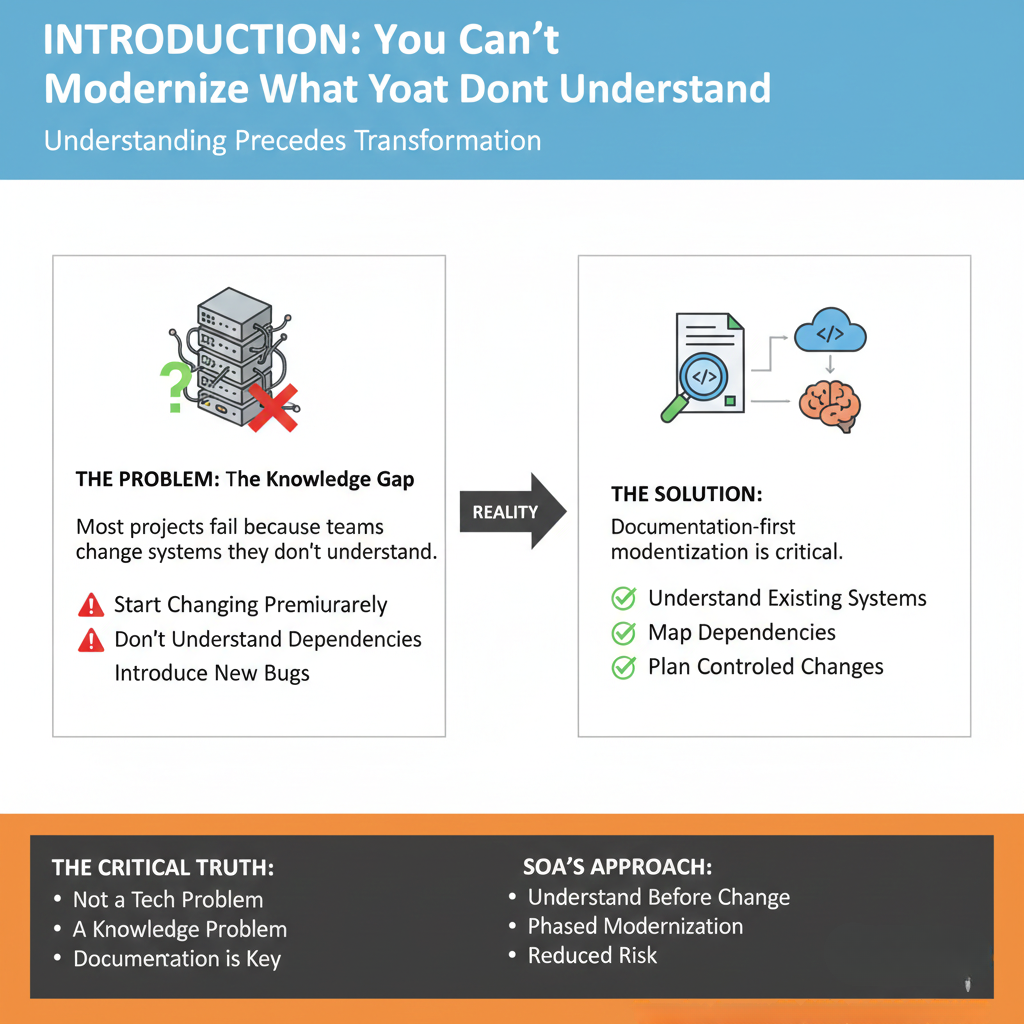
Introduction: You Can’t Modernize What You Don’t Understand
Most legacy modernization projects don’t fail because of technology.
They fail because teams start changing systems they don’t fully understand.
That’s where documentation‑first modernization becomes critical.
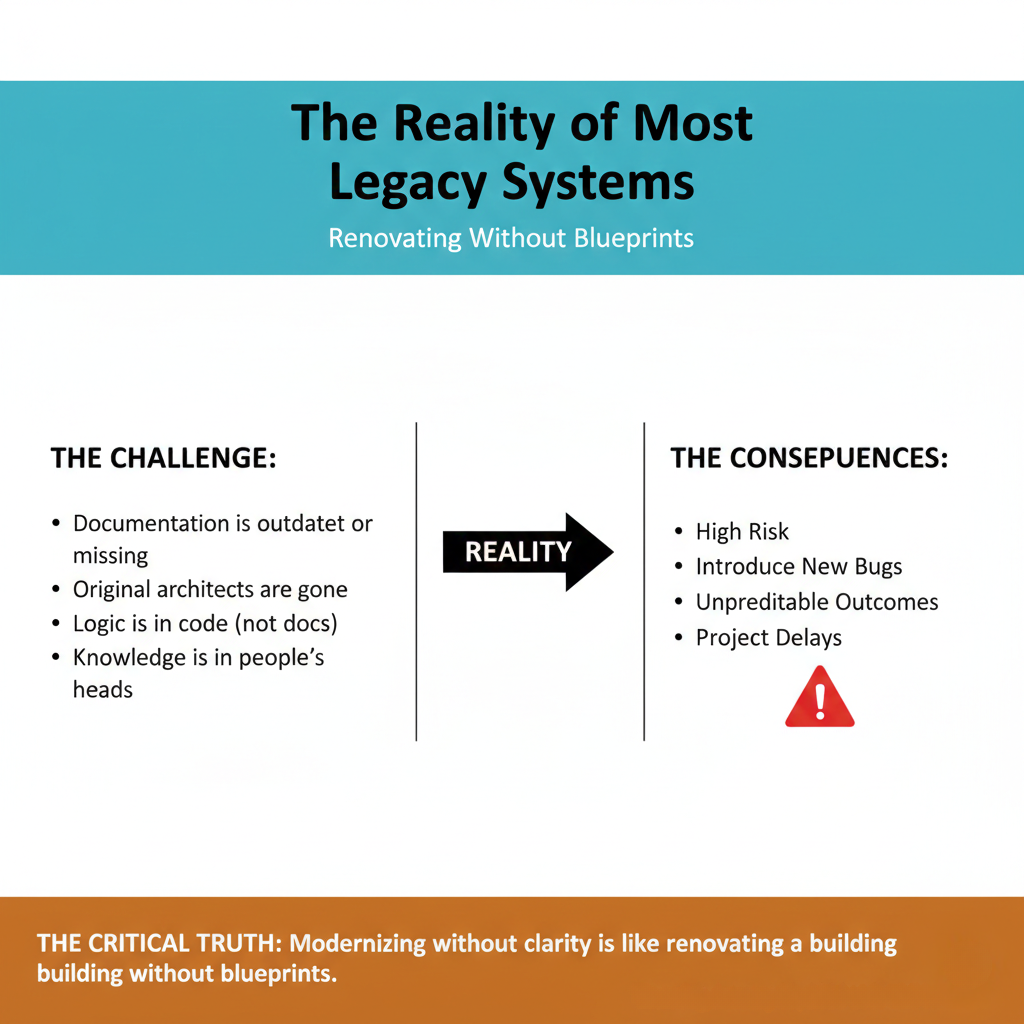
The Reality of Most Legacy Systems
In many organizations:
Documentation is outdated or missing
Original architects are no longer available
Business logic lives inside code
Knowledge exists only in people’s heads
Modernizing without clarity is like renovating a building without blueprints.
What “Documentation‑First” Really Means
Documentation‑first modernization is not about writing documents for compliance.
It means creating living clarity around:
What the system does
Why it exists
How data flows
Which parts are critical to the business
This clarity becomes the foundation for every modernization decision.
1. Key Documentation Artifacts That Matter
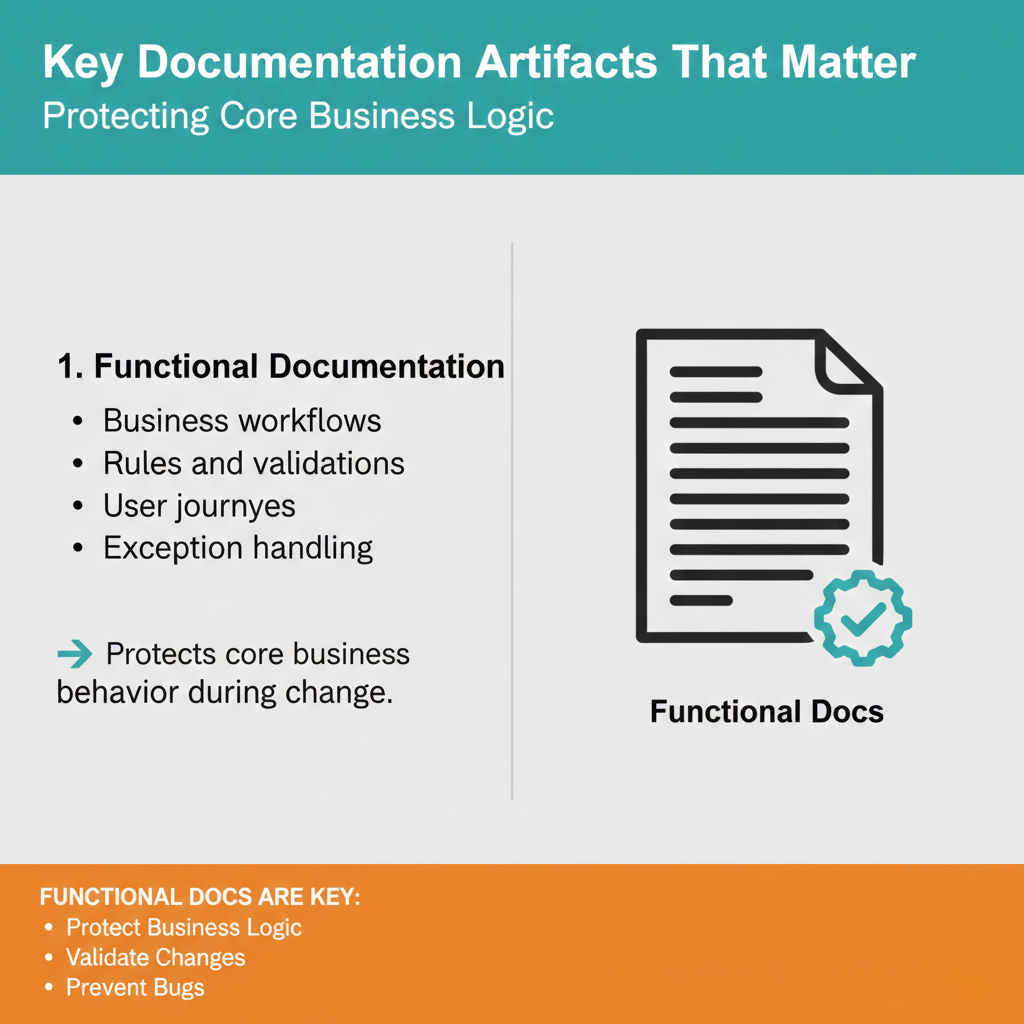
1. Functional Documentation
Business workflows
Rules and validations
User journeys
Exception handling
👉 Protects core business behavior during change.
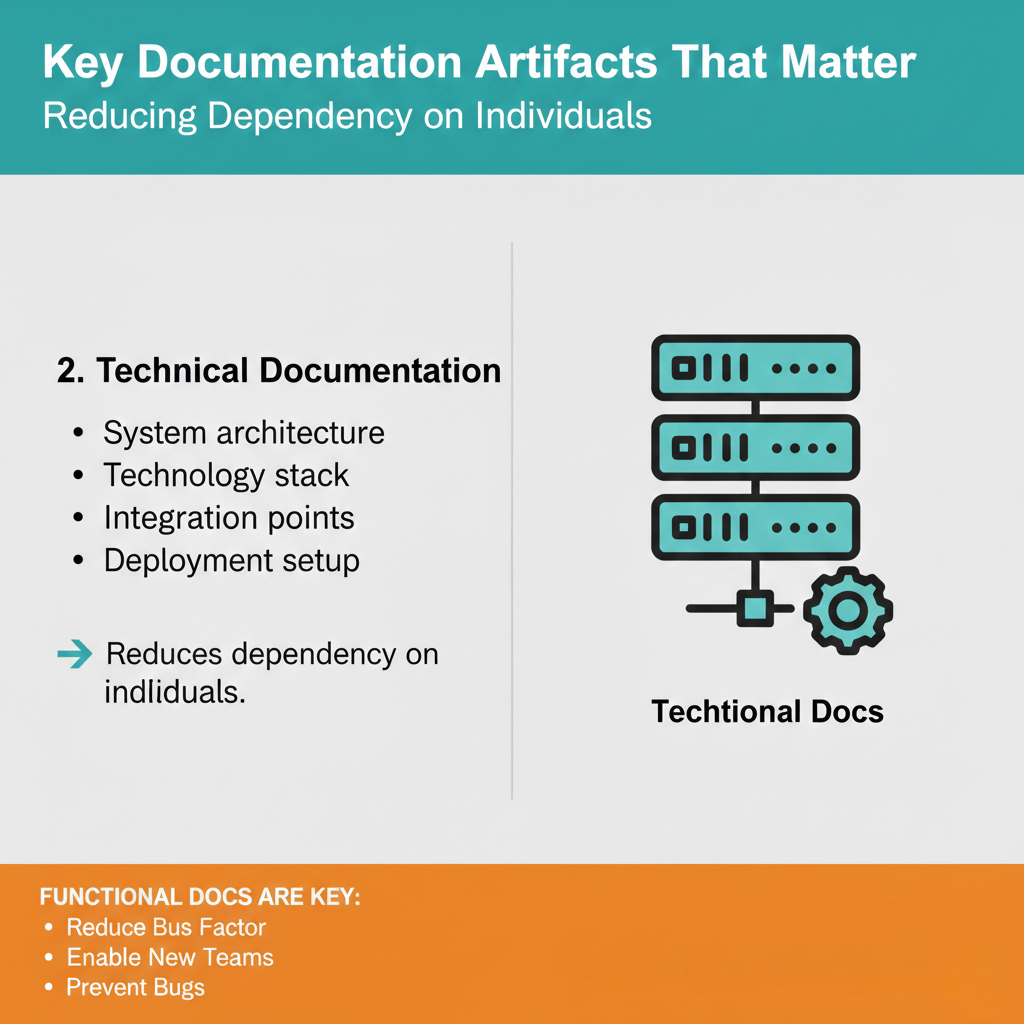
2. Technical Documentation
System architecture
Technology stack
Integration points
Deployment setup
👉 Reduces dependency on individuals.
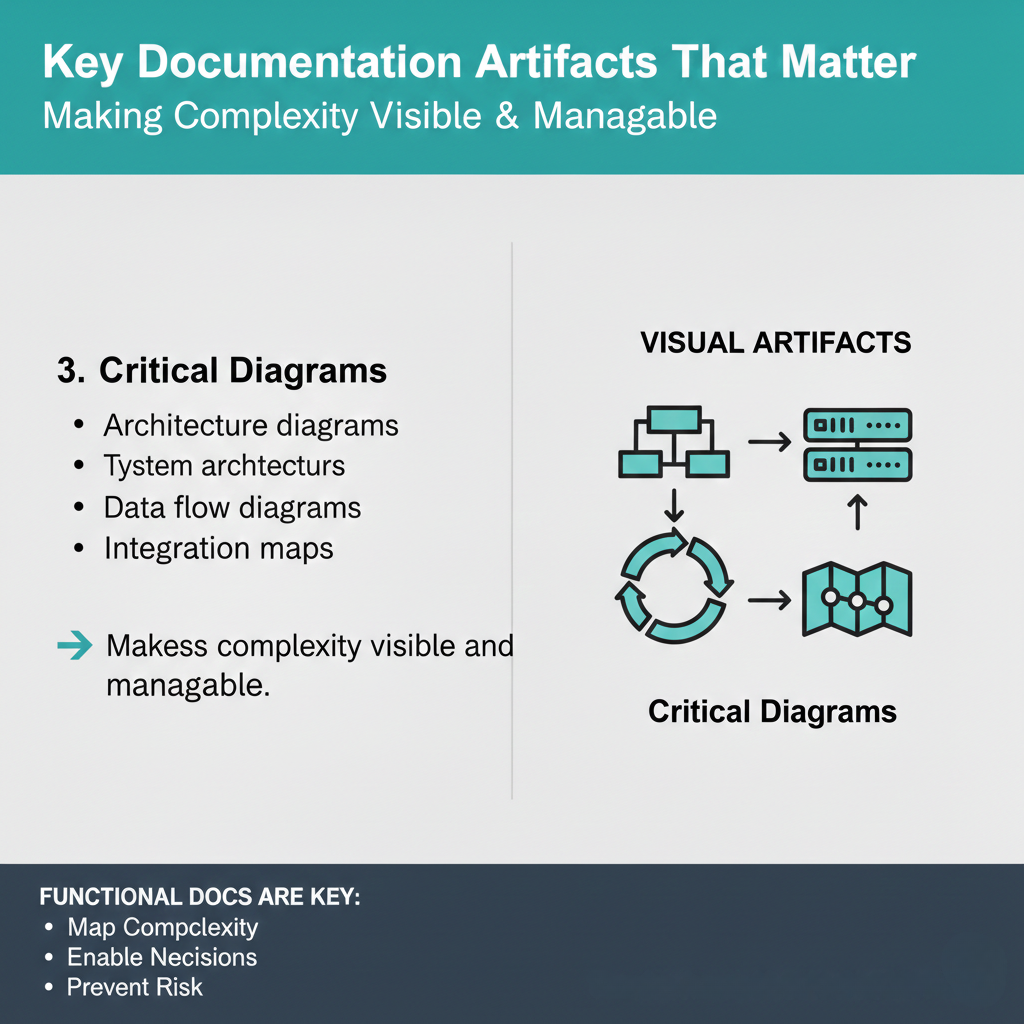
3. Critical Diagrams
Architecture diagrams
Data flow diagrams
Integration maps
👉 Makes complexity visible and manageable.
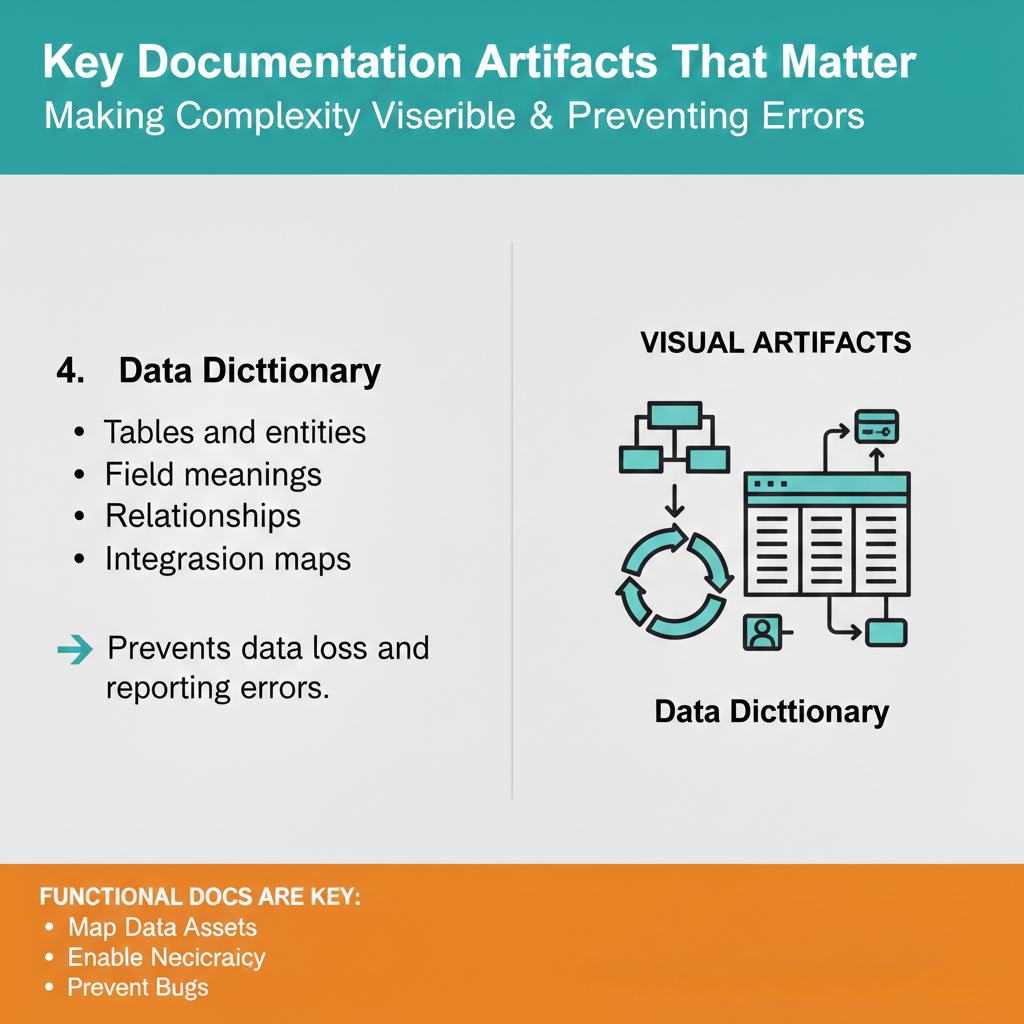
4. Data Dictionary
Tables and entities
Field meanings
Relationships
Data ownership
👉 Prevents data loss and reporting errors.
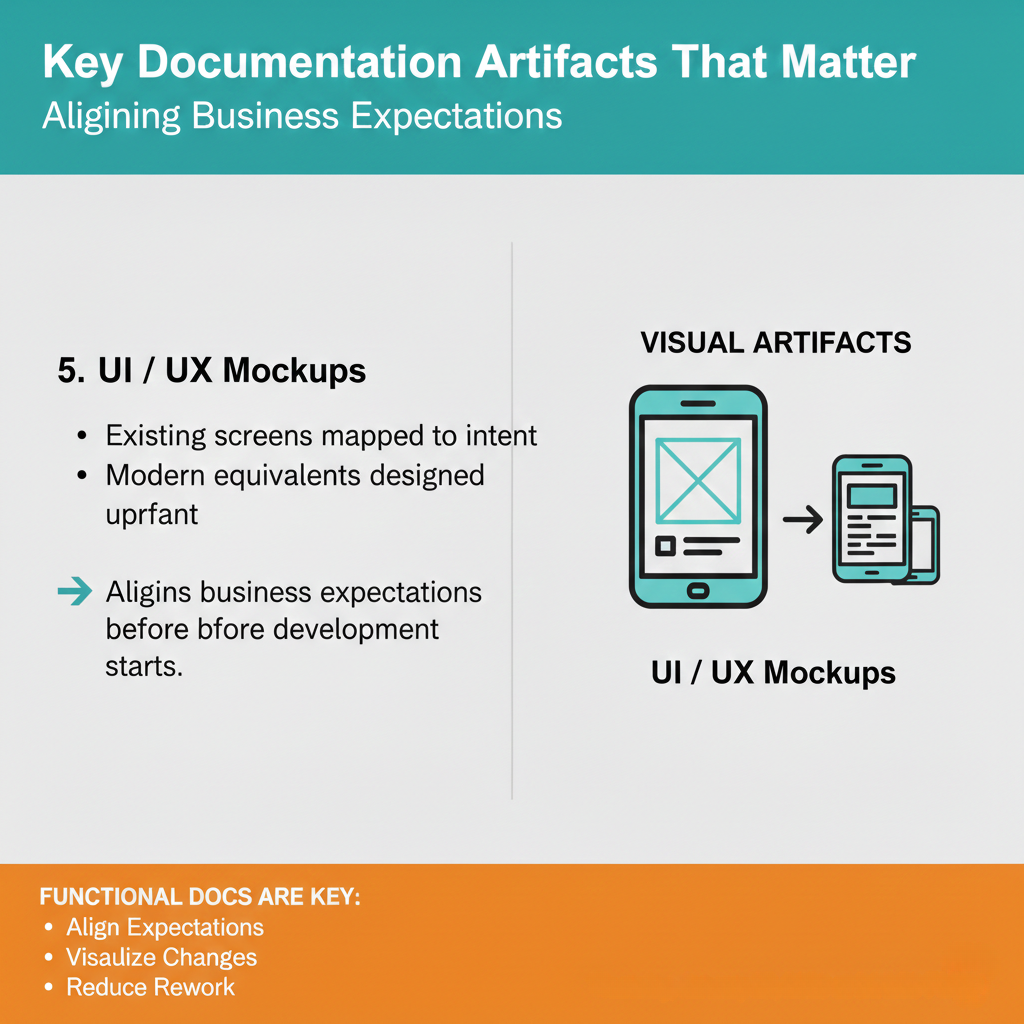
5. UI / UX Mockups
Existing screens mapped to intent
Modern equivalents designed upfront
👉 Aligns business expectations before development starts.
Why This Approach Reduces Risk
Documentation‑first modernization:
Prevents accidental business logic loss
Enables phased modernization
Improves estimation accuracy
Creates shared understanding across teams
It turns modernization from guesswork into strategy.
Why Teams Skip This Step (and Regret It)
Teams often skip documentation because:
“We don’t have time”
“We’ll figure it out while coding”
“The system works anyway”
This usually leads to:
Rework
Delays
Business dissatisfaction
Rollbacks
SOAR’s Documentation‑First Philosophy
At SOAR Technologies, documentation is not overhead — it’s risk insurance.
We:
Extract business logic from legacy code
Create usable, modern documentation
Align business and technical teams
Use documentation as a modernization roadmap
This allows modernization without surprises.
Who This Blog Is For
This blog is for:
Businesses afraid to touch legacy systems
Teams with undocumented applications
Leaders who want predictable modernization