
When Not To
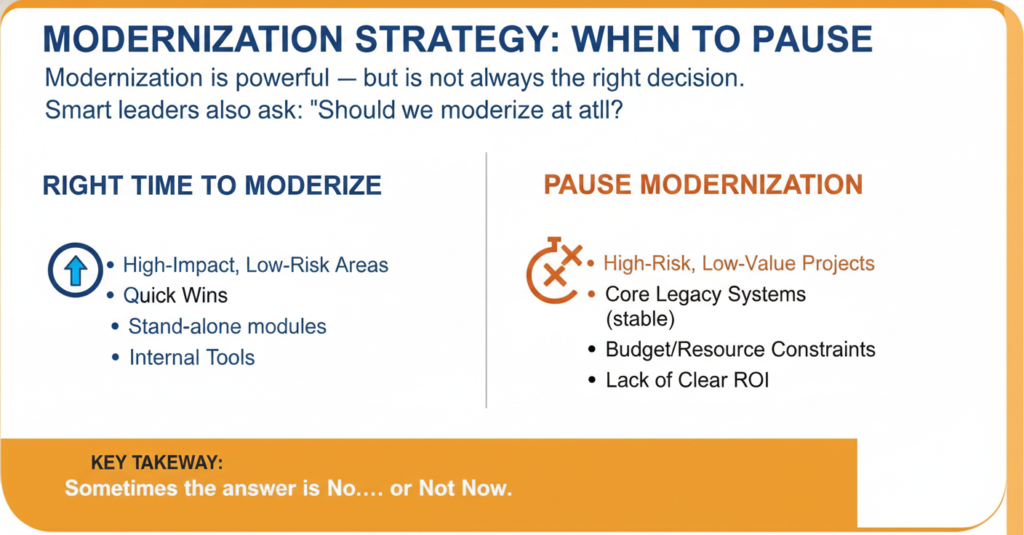
Modernization is powerful — but it is not always the right decision.
Smart leaders also ask:
“Should we modernize at all?”
The correct answer is sometimes No… or Not Now.
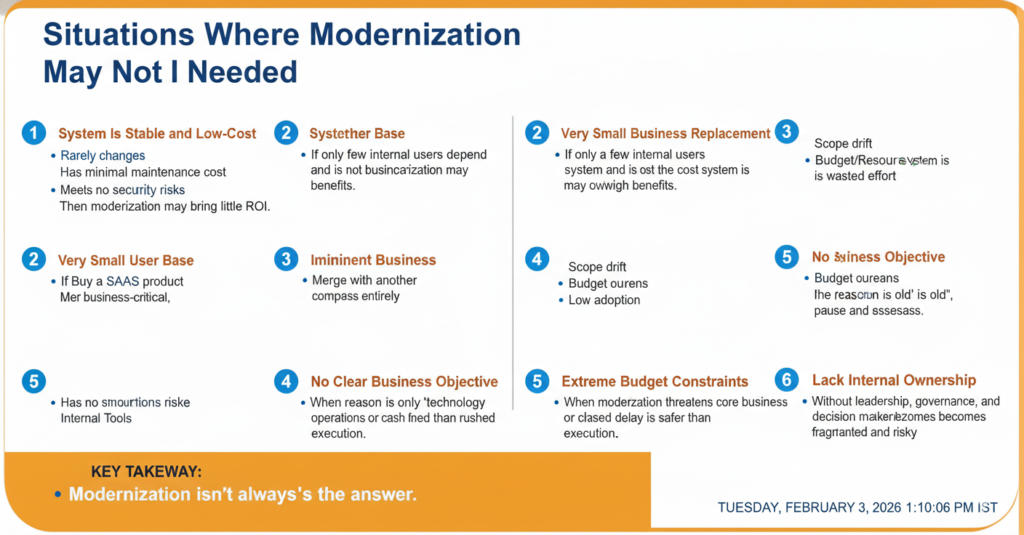
Situations Where Modernization May Not Be Needed
1. System Is Stable and Low‑Cost
If the application:
Rarely changes
Has minimal maintenance cost
Meets business needs
Has no security risks
Then modernization may bring little ROI.
2. Very Small User Base
If only a few internal users depend on the system and it is not business‑critical, the cost of modernization may outweigh benefits.
3. Imminent Business Replacement
If the organization plans to:
Buy a SaaS product
Merge with another company
Retire the process entirely
Modernizing the current system is wasted effort.
4. No Clear Business Objective
Modernization without goals leads to:
Scope drift
Budget overruns
Low adoption
If the reason is only “technology is old,” pause and reassess.
5. Extreme Budget Constraints
When modernization threatens core business operations or cash flow, phased delay is safer than rushed execution.
6. Lack of Internal Ownership
Without leadership, governance, and decision makers, modernization becomes fragmented and risky.
Alternatives to Full Modernization
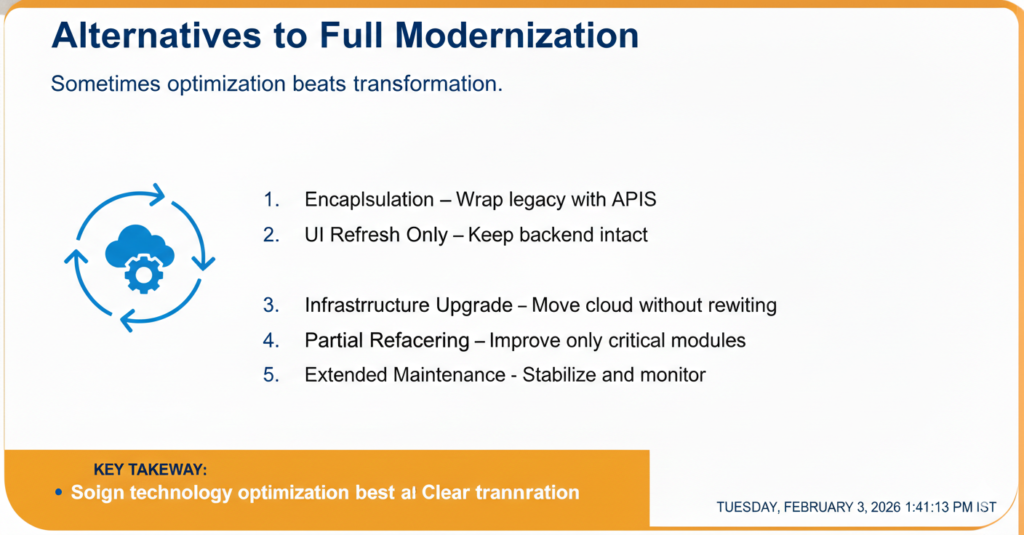
Encapsulation – Wrap legacy with APIs & API KEYs
UI Refresh Only – Keep backend intact
Infrastructure Upgrade – Move to the cloud without rewriting
Partial Refactoring – Improve only critical modules
Extended Maintenance – Stabilize and monitor
Sometimes optimization beats transformation.
Decision Checklist
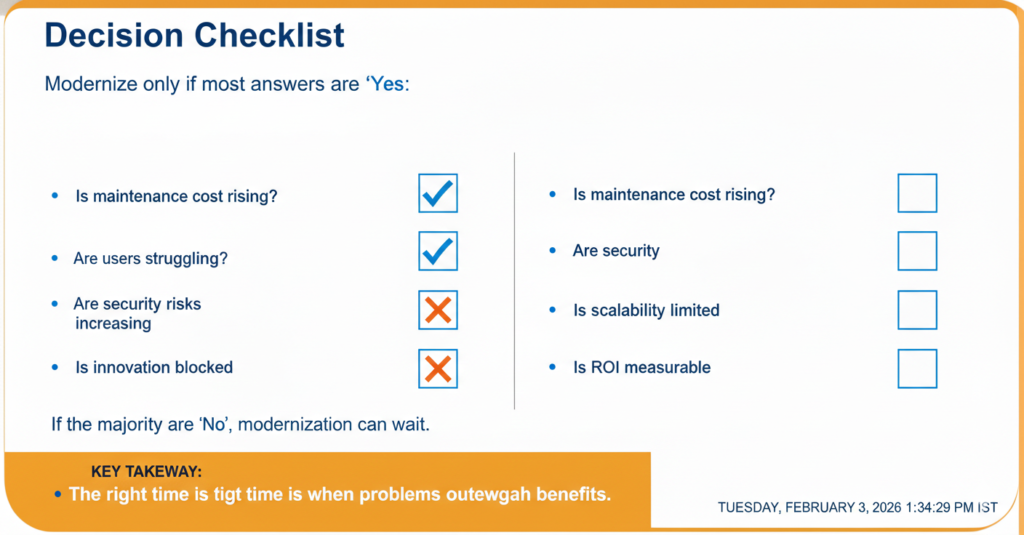
Modernize only if most answers are “Yes”:
Is the maintenance cost rising?
Are users struggling?
Are security risks increasing?
Is scalability limited or not?
Is innovation blocked?
Is ROI measurable?
If the majority is “No,” modernization can wait.
Last Point
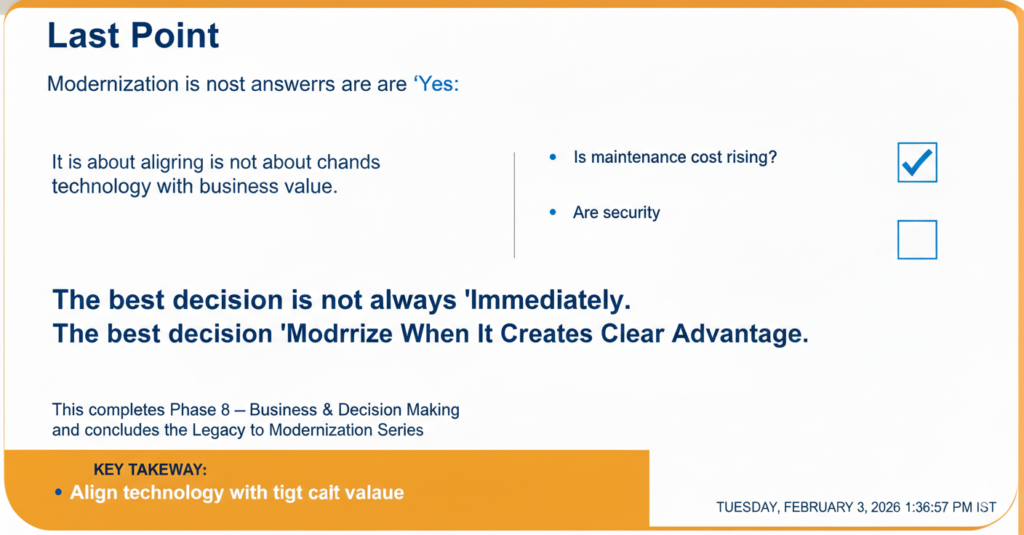
Modernization is not about chasing trends.
It is about aligning technology with business value.
The best decision is not always “Modernize Immediately.”
The best decision is “Modernize When It Creates Clear Advantage.”