
The Waterfall Development Era: Why Legacy Projects Took Years — and Why That No Longer Works
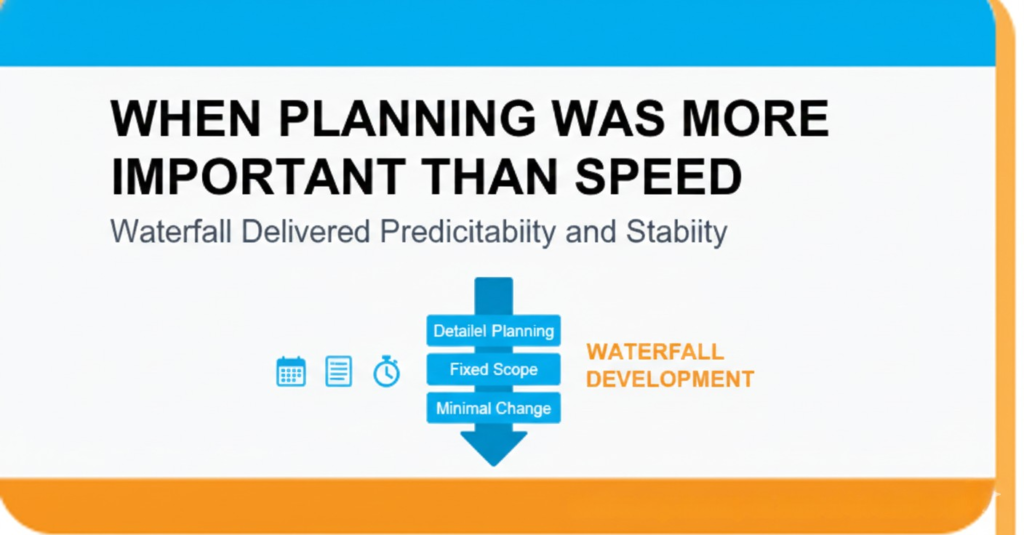
Introduction: When Planning Was More Important Than Speed
Most legacy applications were built using the Waterfall development model.
At that time, it made complete sense.
Businesses wanted:
Predictability
Detailed documentation
Fixed scope and timelines
Minimal change after approval
Waterfall delivered exactly that.
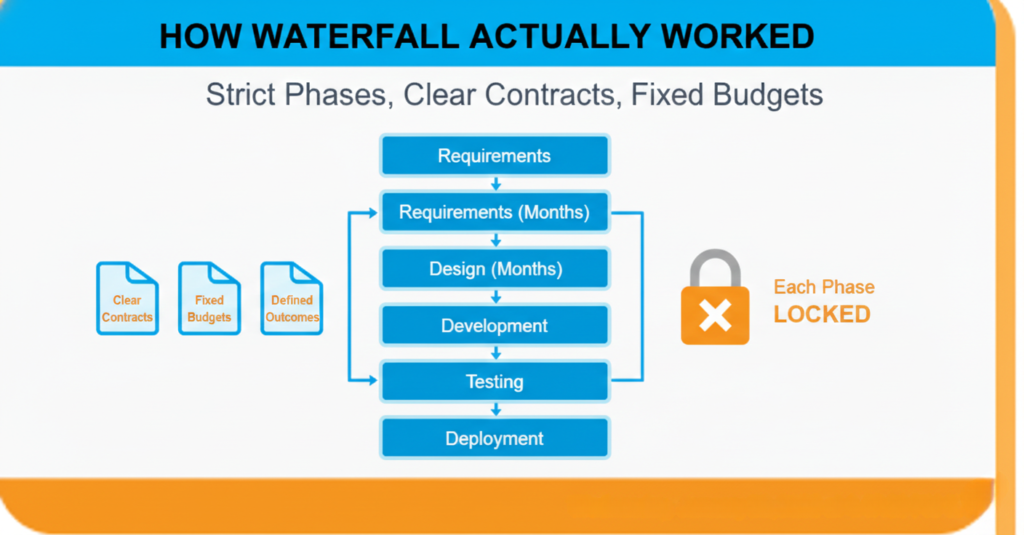
How Waterfall Actually Worked
A typical legacy project followed strict phases:
Requirements (months)
Design (months)
Development
Testing
Deployment
Each phase was locked before moving to the next.
For businesses, this felt safe:
Clear contracts
Fixed budgets
Defined outcomes
Why It Worked in the Legacy Era
Waterfall succeeded because:
Business processes changed slowly
Software releases were infrequent
Users adapted to systems, not the other way around
Infrastructure was stable and predictable
In many enterprises, these systems are still running today — proof that the model once worked.
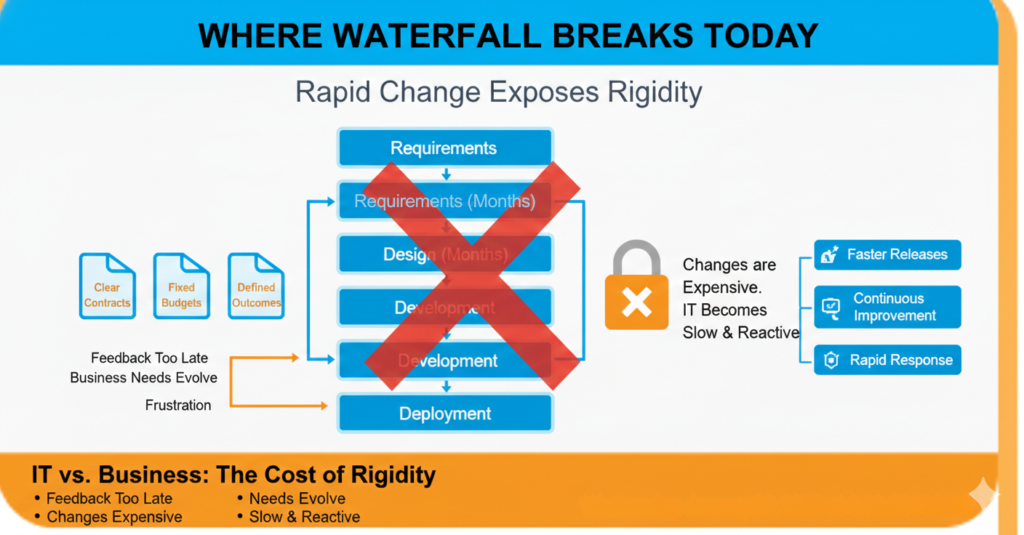
Where Waterfall Breaks Today
Modern business environments demand:
Faster releases
Continuous improvement
Early feedback
Rapid response to market change
Waterfall struggles because:
Feedback comes too late
Changes are expensive
Business needs evolve mid‑project
IT becomes slow and reactive
This creates frustration on both business and technology sides.
The Real Risk for Legacy Systems
When legacy applications built with Waterfall are extended today:
Small changes take months
Risk increases with every release
Innovation slows down
Shadow IT and workarounds appear
Over time, the system becomes a business constraint, not an asset.

Why Agile Changes the Game
Agile doesn’t reject discipline —
it replaces rigidity with adaptability.
Modernization using Agile:
Delivers value in small increments
Allows business feedback early
Reduces risk step by step
Keeps systems usable during change
This is especially critical when modernizing legacy applications.
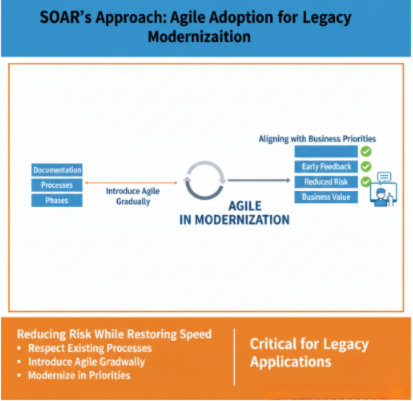
SOAR’s Approach
At SOAR Technologies, we don’t rip out Waterfall systems overnight.
We:
Respect existing documentation and processes
Introduce Agile gradually
Modernize in controlled phases
Align delivery with business priorities
This reduces risk while restoring speed.
Who This Blog Is For
This blog is for:
Organizations stuck with slow releases
Teams afraid to change legacy systems
Business leaders frustrated with long IT cycles