
The SOAR Legacy Modernization Framework: A Safe, Structured Path from Risk to Resilience
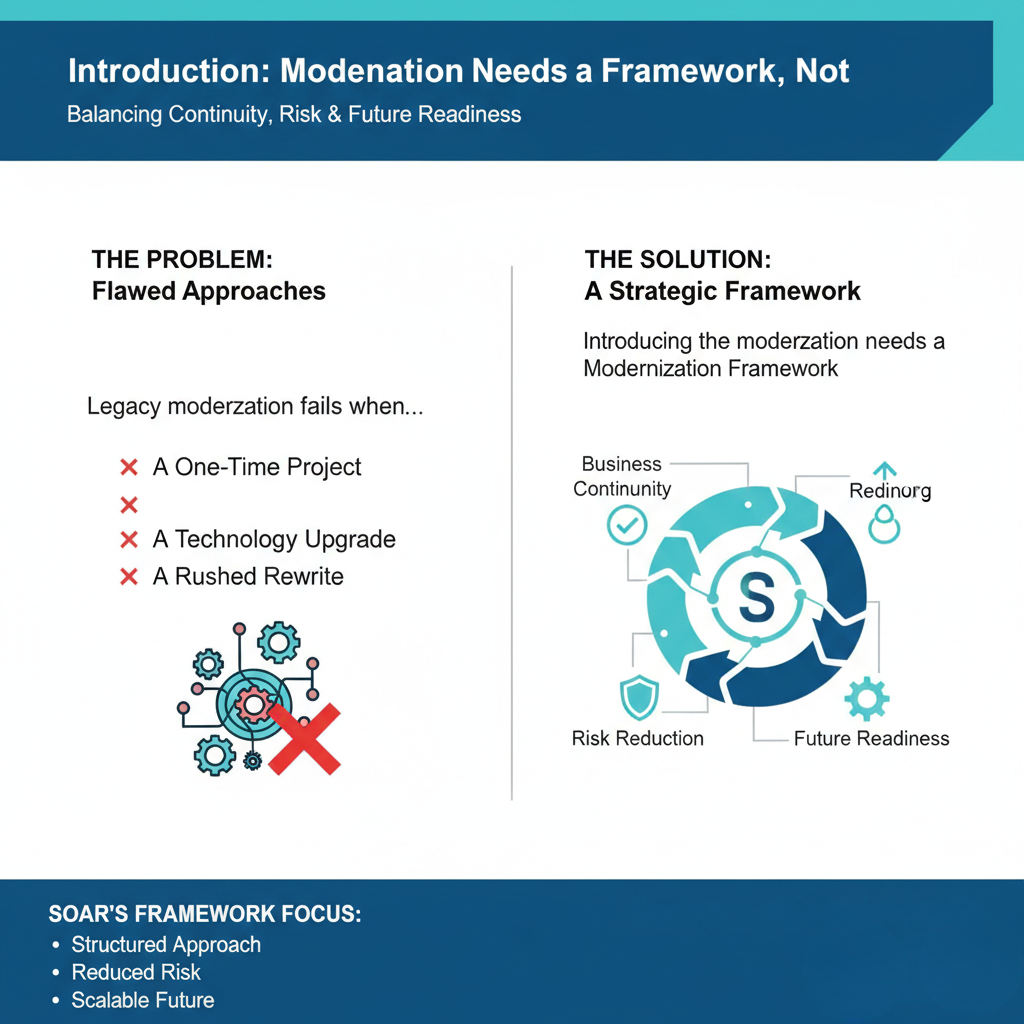
Introduction: Modernization Needs a Framework, Not Experiments
Legacy modernization fails when it’s treated as:
A one‑time project
A technology upgrade
A rushed rewrite
Successful modernization needs a framework — one that balances business continuity, risk reduction, and future readiness.
That’s exactly what the SOAR Modernization Framework is designed to do.
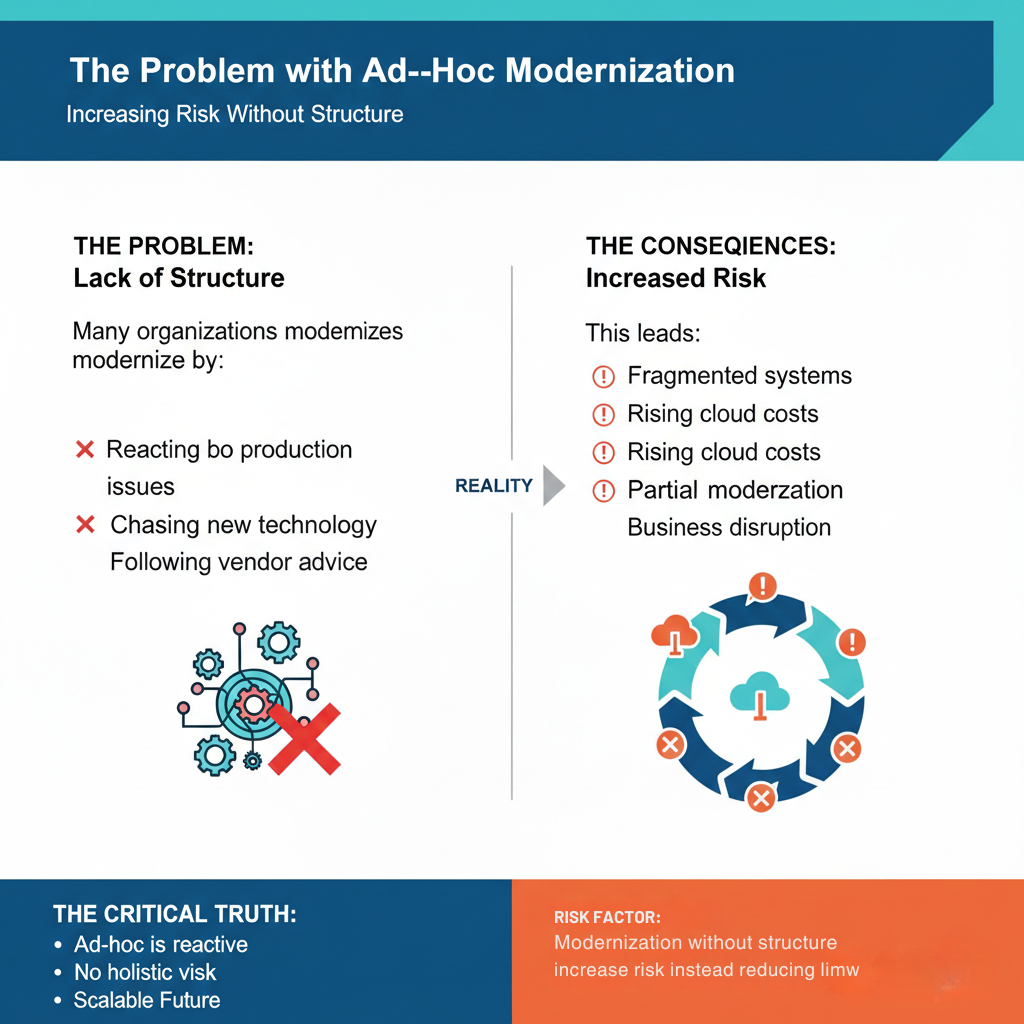
The Problem with Ad‑Hoc Modernization
Many organizations modernize by:
Reacting to production issues
Chasing new technology
Following vendor advice
This leads to:
Fragmented systems
Rising cloud costs
Partial modernization
Business disruption
Modernization without structure increases risk instead of reducing it.
The SOAR Modernization Framework (High Level)
The SOAR framework follows a phased, business‑first approach:
Understand
Stabilize
Modernize
Optimize
Scale
Each phase delivers value independently — no big‑bang changes.
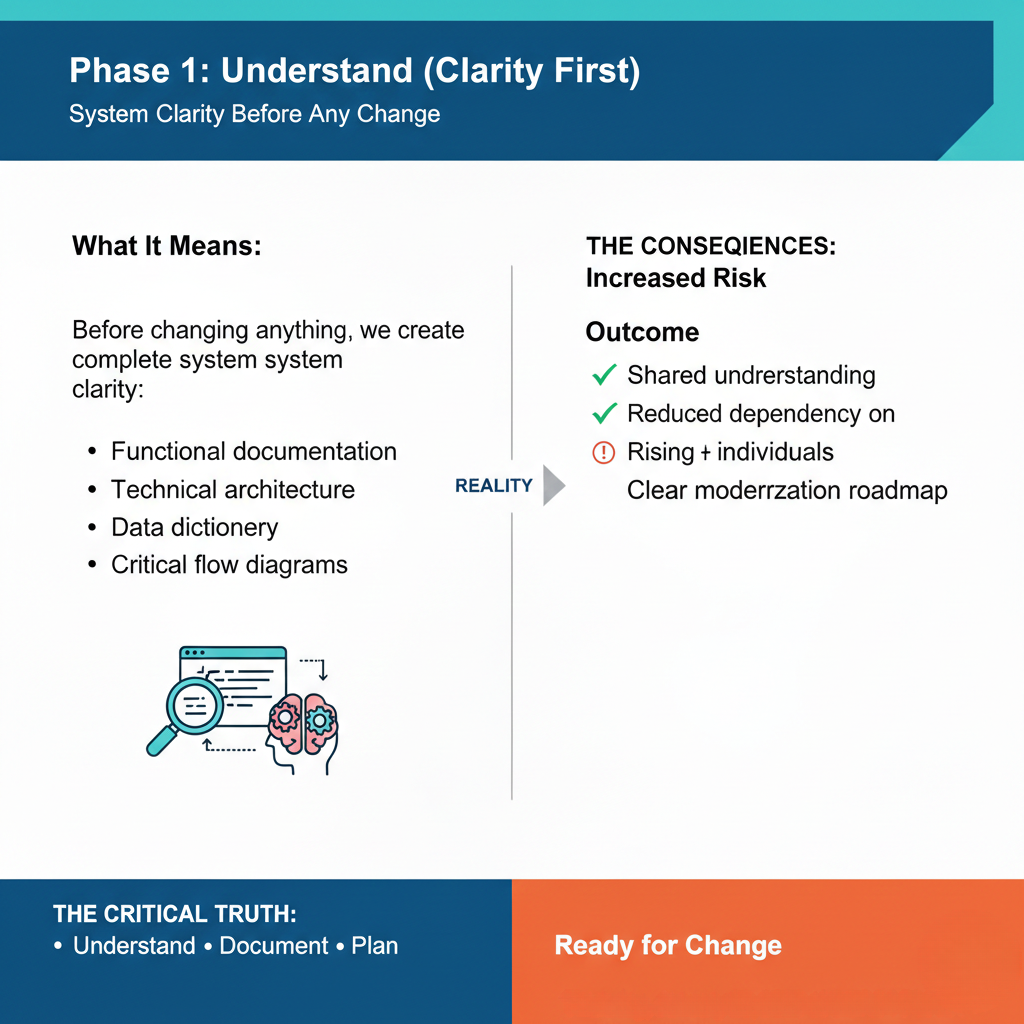
Phase 1: Understand (Clarity First)
Before changing anything, we create complete system clarity:
Functional documentation
Technical architecture
Data dictionary
Critical flow diagrams
Outcome:
✔ Shared understanding
✔ Reduced dependency on individuals
✔ Clear modernization roadmap
Phase 2: Stabilize (Risk Reduction)
Next, we reduce operational risk:
Improve deployments
Isolate critical components
Add monitoring & observability
Reduce failure blast radius
Outcome:
✔ Safer releases
✔ Improved confidence
✔ Business continuity
Phase 3: Modernize (Incrementally)
Now we modernize piece by piece:
API enablement
Service extraction
UI modernization
Cloud‑ready architecture
Outcome:
✔ Continuous value delivery
✔ No downtime
✔ Faster ROI
Phase 4: Optimize (Efficiency & Cost)
Once modernized:
Improve performance
Optimize cloud usage
Automate processes
Improve developer productivity
Outcome:
✔ Lower operating cost
✔ Faster delivery cycles
Phase 5: Scale (Future Ready)
Finally, systems are ready to:
Scale with business growth
Support new channels
Integrate with modern platforms
Adapt to future change
Outcome:
✔ Long‑term resilience
✔ Business agility
Why This Framework Works
The SOAR framework:
Avoids rewrite traps
Reduces risk early
Aligns IT with business goals
Delivers value at every step
Modernization becomes a controlled journey, not a gamble.
Who This Framework Is For
This approach is ideal for:
Businesses running mission‑critical legacy systems
Enterprises afraid of modernization failure
Leaders who want predictability, not surprises