
Legacy Modernization Approaches Compared: Rewrite vs Re‑Engineer vs Incremental Modernization
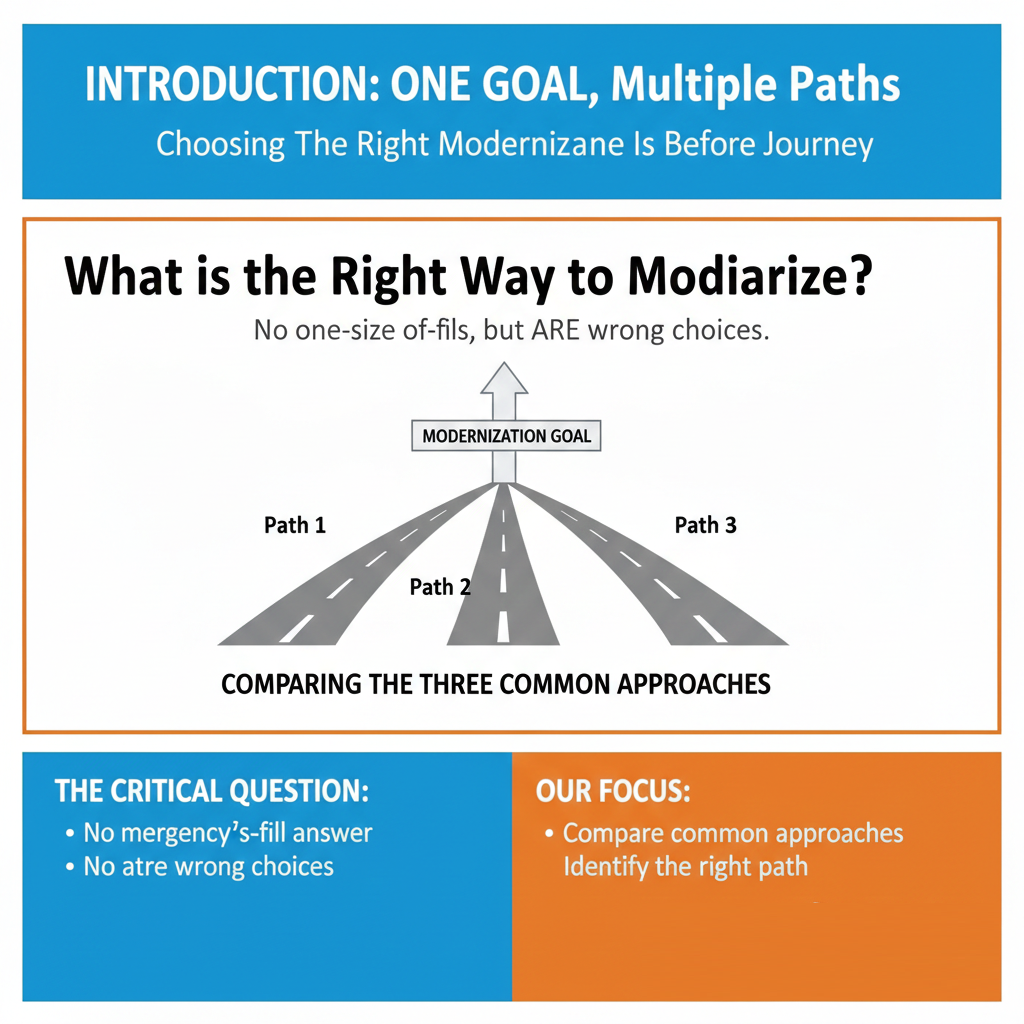
Introduction: One Goal, Multiple Paths
Once a business agrees that modernization is necessary, the next question is critical:
“What is the right way to modernize?”
There is no one‑size‑fits‑all answer — but there are wrong choices.
Let’s compare the three most common approaches.
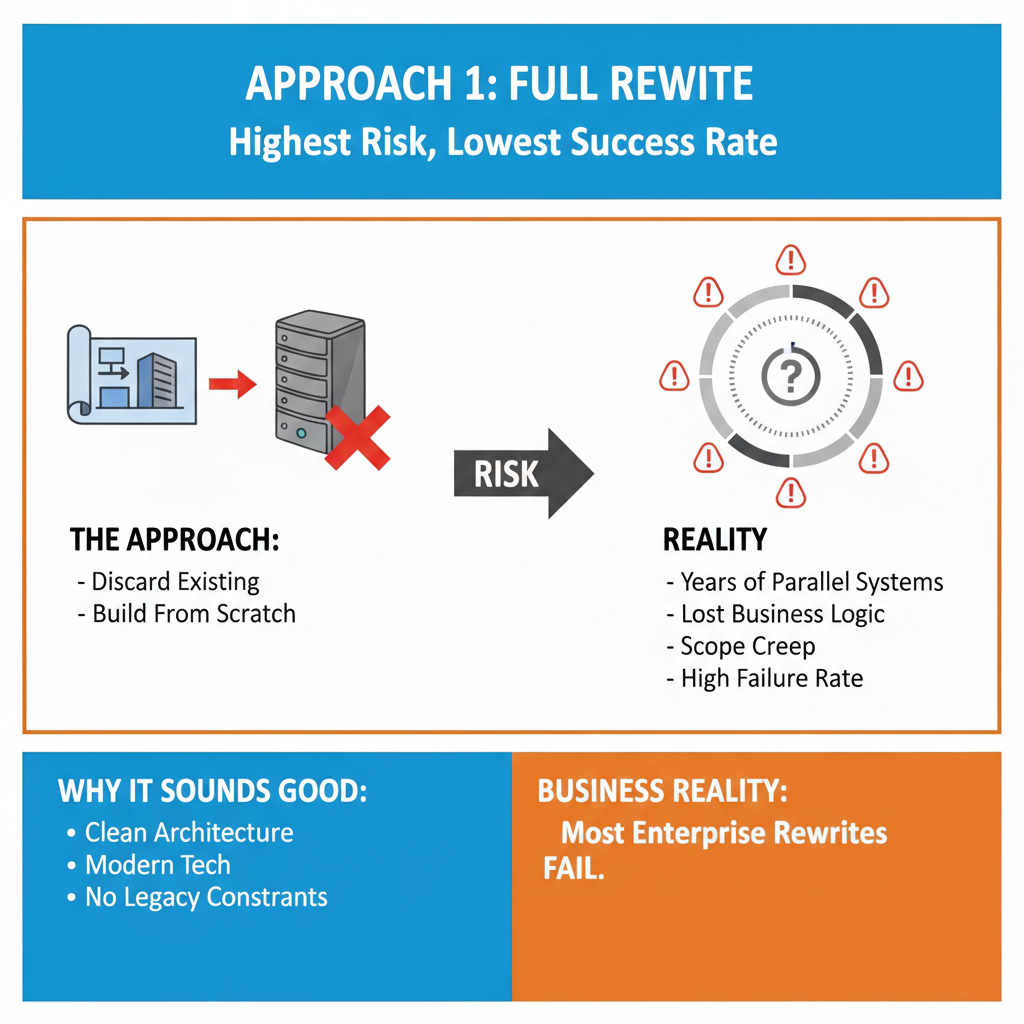
Approach 1: Full Rewrite
What it means:
Discard the existing system and build a new one from scratch.
Why it sounds attractive:
Clean architecture
Modern tech stack
No legacy constraints
Hidden risks:
Loss of critical business logic
Long timelines (often years)
Parallel system maintenance
High failure rate
Best suited for:
Small, non‑critical systems with limited logic.
Business reality:
Most enterprise rewrites fail before go‑live.
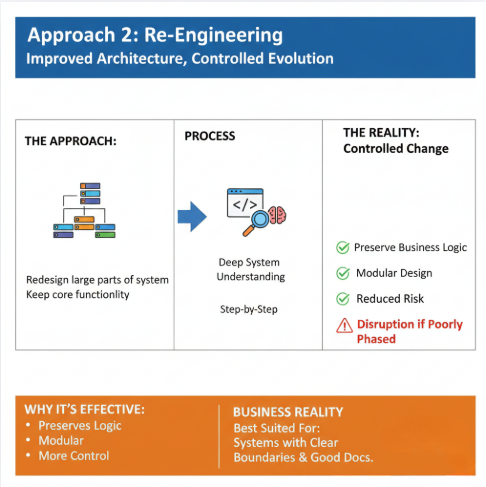
Approach 2: Re‑Engineering
What it means:
Redesigning large parts of the system while keeping core functionality.
Benefits:
Preserves business logic
Improves architecture
More control than rewrite
Challenges:
Requires deep system understanding
Still risky if done in big chunks
Business disruption if poorly phased
Best suited for:
Systems with clear boundaries and documentation.
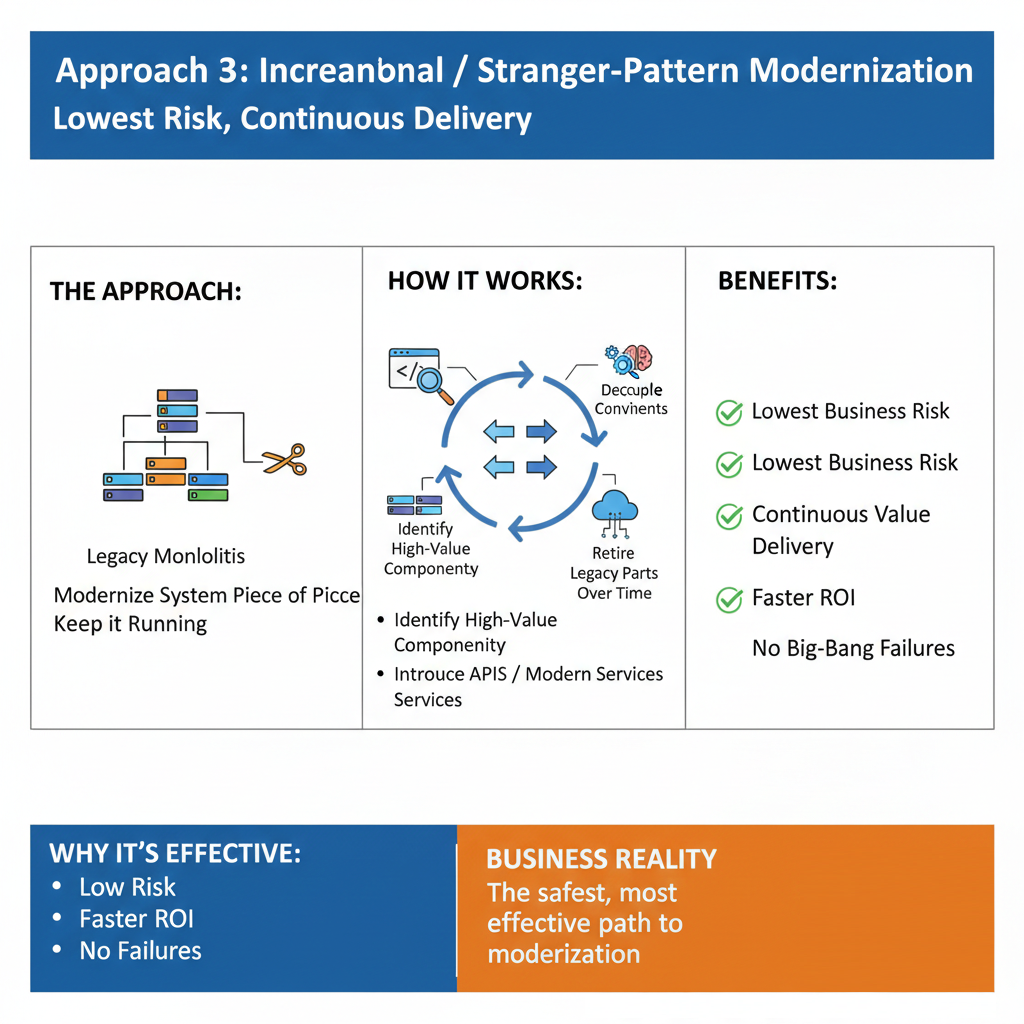
Approach 3: Incremental / Strangler‑Pattern Modernization
What it means:
Modernize the system piece by piece while keeping it running.
How it works:
Identify high‑value components
Decouple functionality gradually
Introduce APIs and modern services
Retire legacy parts over time
Benefits:
Lowest business risk
Continuous value delivery
Faster ROI
No big‑bang failures
Best suited for:
Mission‑critical enterprise systems.
Why Incremental Modernization Wins
From a business perspective, this approach:
Protects revenue
Reduces downtime risk
Allows learning and correction
Aligns with real business priorities
It turns modernization into a controlled journey, not a gamble.
SOAR’s Recommendation
At SOAR Technologies, we almost always start with:
Incremental modernization
Risk reduction first
Deployment & architecture improvements early
We choose business safety over technical elegance.
Who This Blog Is For
This blog is for:
CTOs evaluating modernization strategies
Business leaders approving budgets
Teams stuck choosing between rewrite or delay