
Common Legacy Modernization Myths That Cost Businesses Time, Money, and Stability
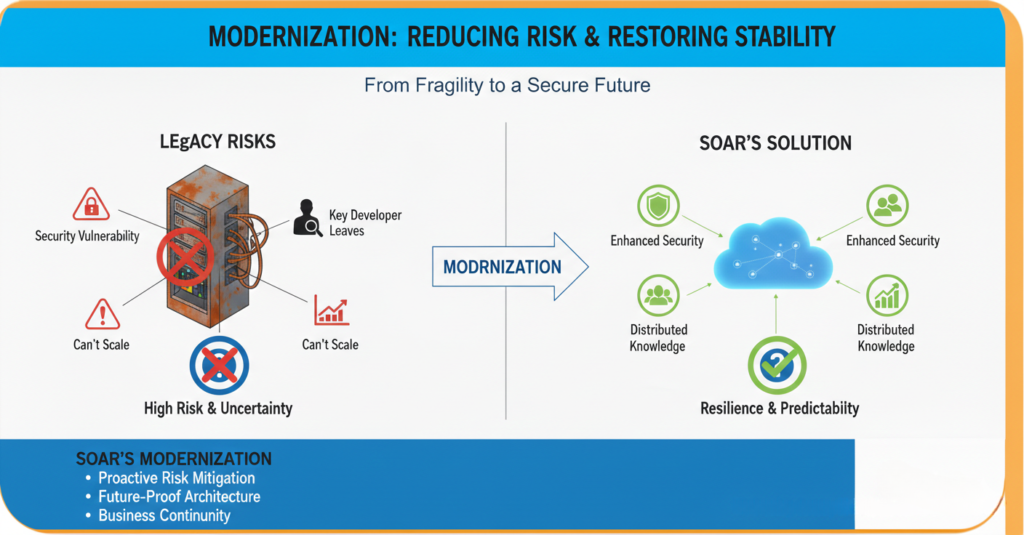
Introduction: Why Modernization Often Fails Before It Starts
Legacy modernization doesn’t fail because of technology.
It fails because of wrong assumptions.
Over the years, we’ve seen businesses delay, rush, or mis-handle modernization — all because of common myths.
Let’s break them.
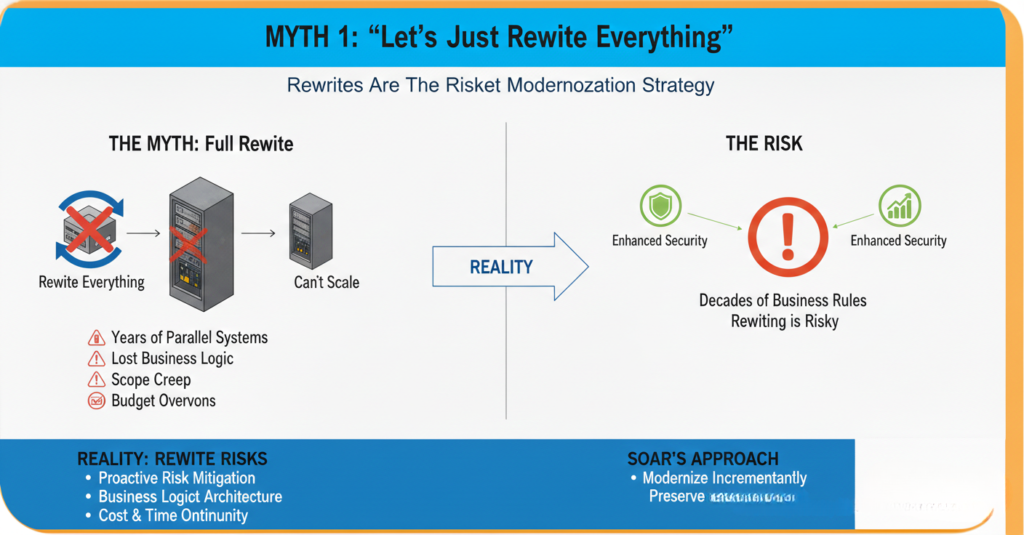
Myth 1: “Let’s Just Rewrite Everything”
A full rewrite sounds clean and attractive.
In reality, it often means:
Years of parallel systems
Lost business logic
Scope creep
Budget overruns
Most legacy systems contain decades of validated business rules. Rewriting without understanding them is risky.
Reality: Rewrites are the riskiest modernization strategy.
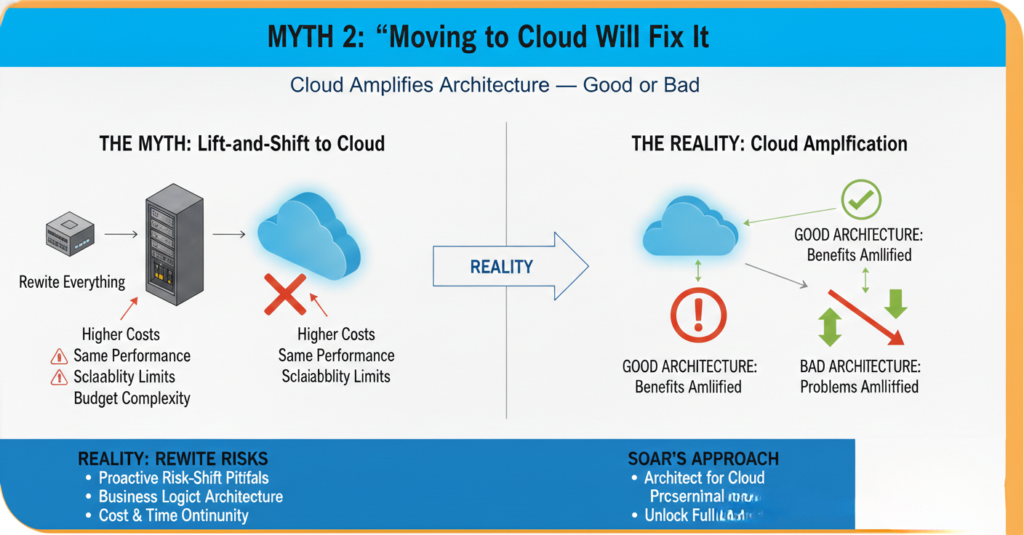
Myth 2: “Moving to Cloud Will Fix It”
Cloud is powerful — but it’s not magic.
Lift‑and‑shift often results in:
Higher costs
Same performance issues
Same scalability limits
New operational complexity
Reality: Cloud amplifies architecture — good or bad.
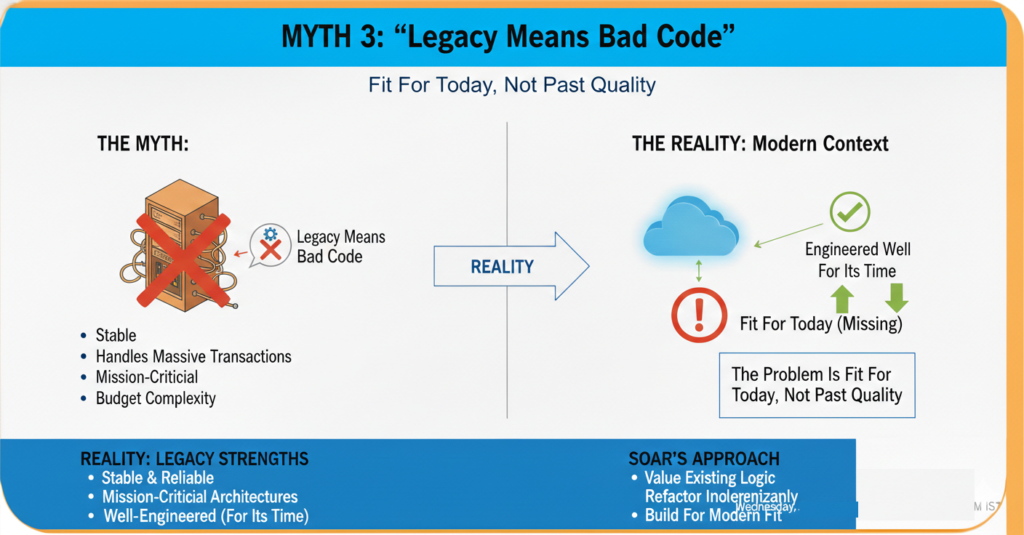
Myth 3: “Legacy Means Bad Code”
Many legacy systems:
Are stable
Handle massive transactions
Run mission‑critical operations
They survived because they were engineered well for their time.
Reality: The problem is fit for today, not past quality.
Myth 4: “Modernization Will Disrupt the Business”
Big‑bang modernization causes disruption — not modernization itself.
Planned modernization:
Happens incrementally
Keeps systems running
Reduces risk step by step
Reality: Smart modernization reduces disruption instead of creating it.
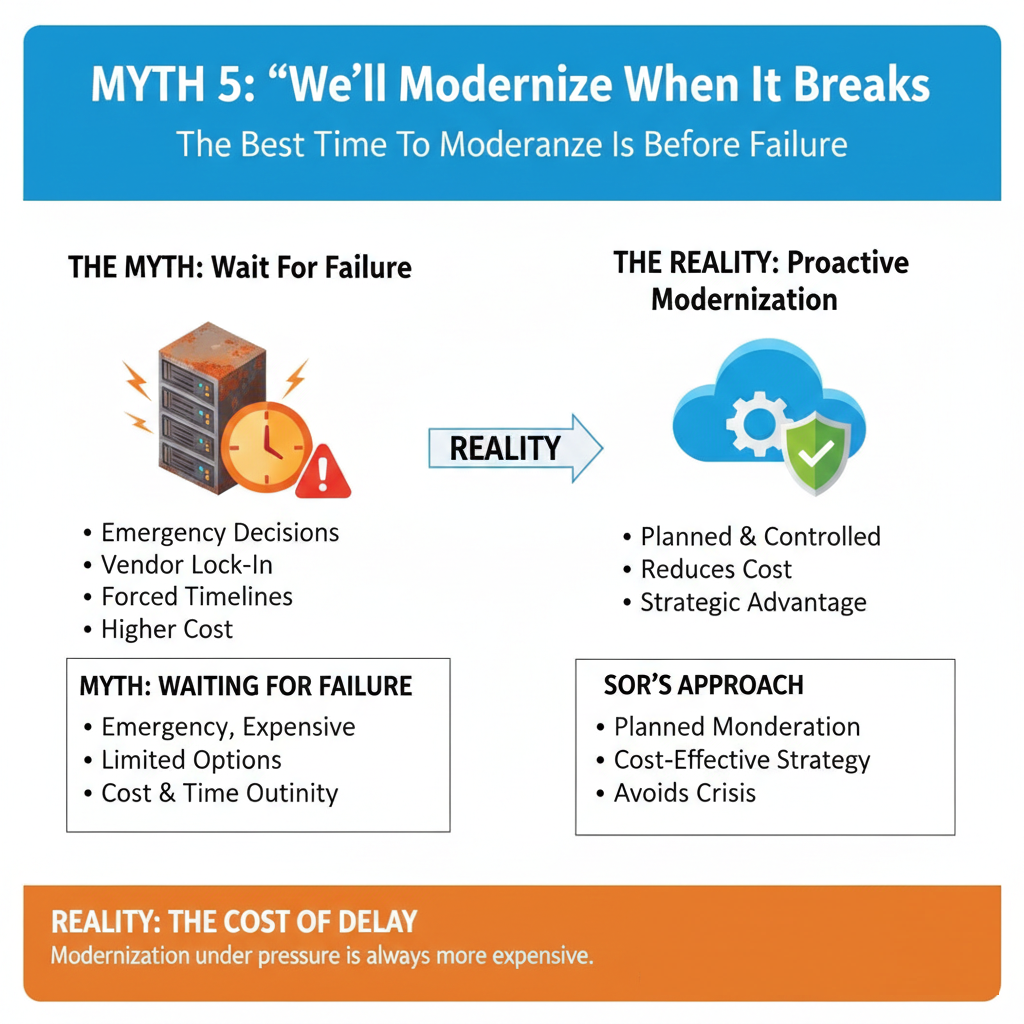
Myth 5: “We’ll Modernize When It Breaks”
Waiting leads to:
Emergency decisions
Vendor lock‑in
Forced timelines
Higher cost
Modernization under pressure is always more expensive.
Reality: The best time to modernize is before failure.
What Actually Works
Successful modernization focuses on:
Understanding existing business logic
Reducing risk early
Improving deployment and scalability first
Modernizing in phases, not projects
This approach aligns technology change with business continuity.
SOAR’s Perspective
At SOAR Technologies, we help clients:
Avoid rewrite traps
Modernize incrementally
Protect business operations
Build confidence before speed
Modernization is a strategy, not a reaction.
Who This Blog Is For
This blog is for:
Business leaders planning modernization
CTOs evaluating options
Teams stuck in analysis paralysis