
Cloud Revolution: Why Legacy Applications Start Failing in a Cloud‑First World
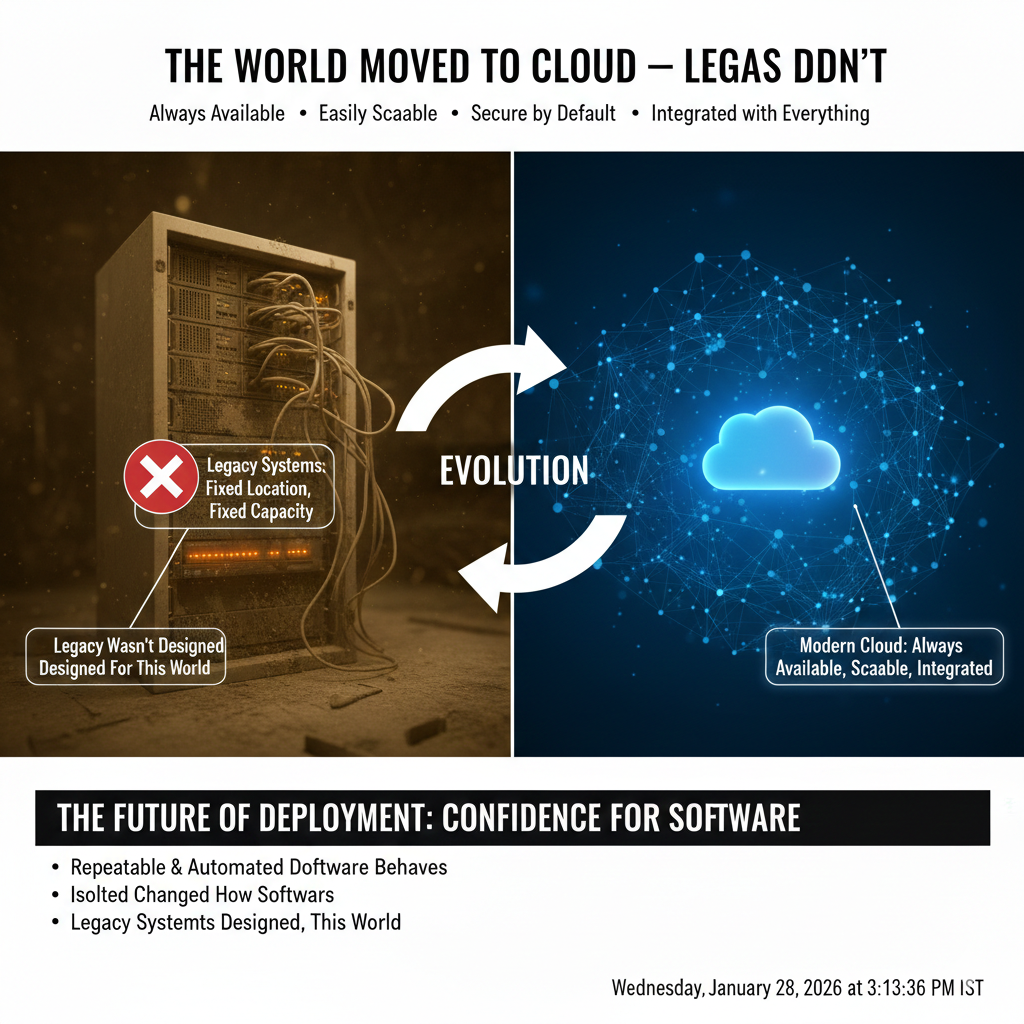
Introduction: The World Moved to Cloud — Legacy Didn’t
The cloud didn’t just change where software runs.
It changed how businesses expect software to behave.
Always available.
Easily scalable.
Secure by default.
Integrated with everything.
Legacy applications struggle here — not because they are bad, but because they were never designed for this world.
How Legacy Systems Were Designed
Most legacy systems assume:
Fixed servers
Known load patterns
Internal users
Controlled environments
They were built for predictability, not elasticity.
That worked perfectly in an on‑premise era.
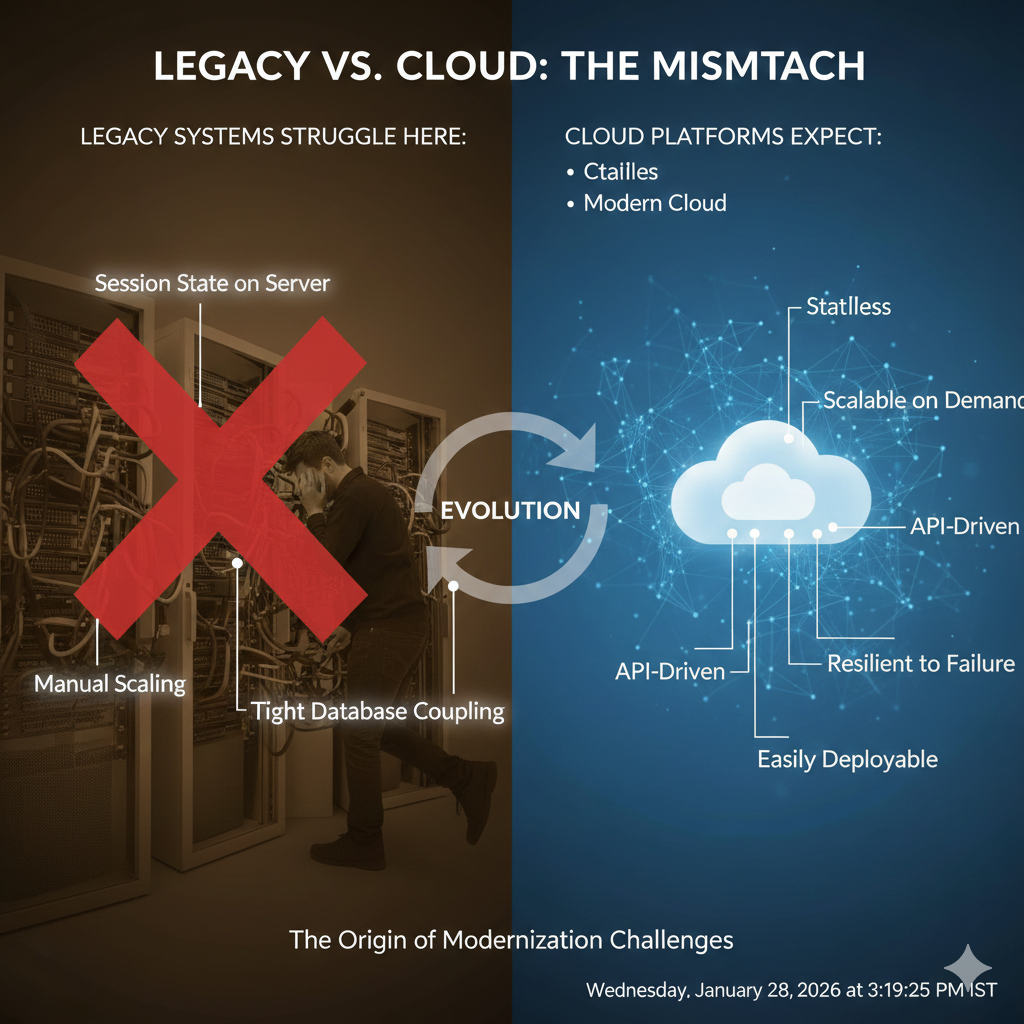
What Cloud Expects
Cloud platforms expect applications to be:
Stateless
Scalable on demand
API‑driven
Resilient to failure
Easily deployable
Legacy systems often rely on:
Session state on server
Tight database coupling
File‑system dependencies
Manual scaling
This mismatch is where problems begin.
Common Cloud‑Related Failures
When legacy apps are “lifted and shifted” to cloud, businesses face:
Poor performance
Unexpected cost spikes
Security gaps
Downtime under load
Complex troubleshooting
The cloud exposes architectural weaknesses that stayed hidden for years.
Why Lift‑and‑Shift Is Not Modernization
Simply hosting a legacy app on cloud:
Does not make it cloud‑native
Does not improve scalability
Does not reduce operational risk
In many cases, it increases cost and complexity.
The Right Way Forward
Successful cloud modernization focuses on:
Identifying cloud‑blocking components
Decoupling critical business logic
Introducing APIs gradually
Improving deployment and scalability step by step
This allows businesses to:
Gain cloud benefits
Reduce risk
Avoid big‑bang rewrites
At SOAR Technologies, we help organizations prepare legacy systems for cloud — before pushing them into it.
Who This Blog Is For
This blog is for:
Businesses planning cloud migration
IT teams struggling with lift‑and‑shift failures
Leaders who want cloud benefits without disruption