
Assessing Legacy Systems: How to Know What to Modernize First
Introduction: Not Everything Needs Modernization
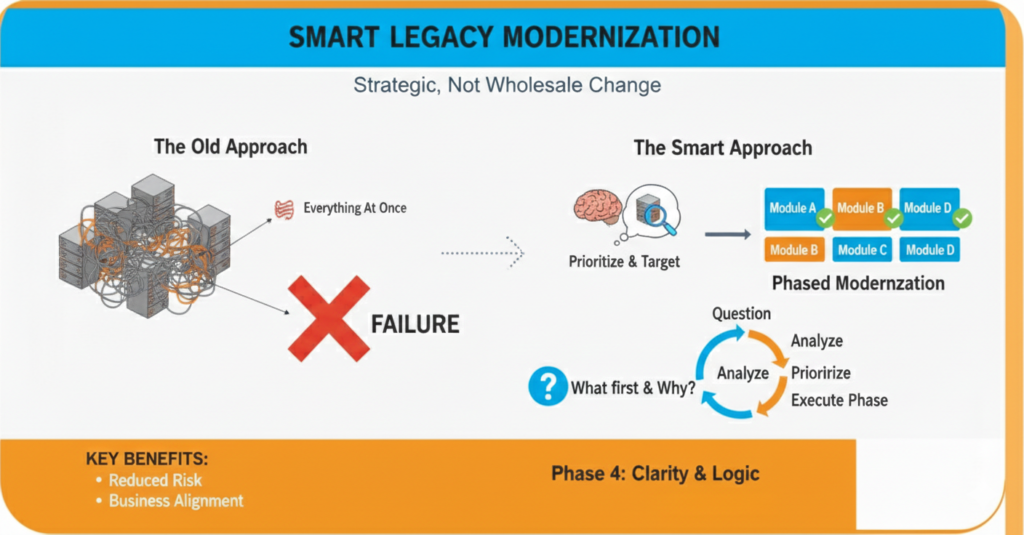
One of the biggest mistakes in legacy modernization is trying to modernize everything at once.
Smart modernization starts with a simple question:
“What should we modernize first — and why?”
Phase 4 begins by answering that question with clarity and logic.
Why Assessment Comes Before Action
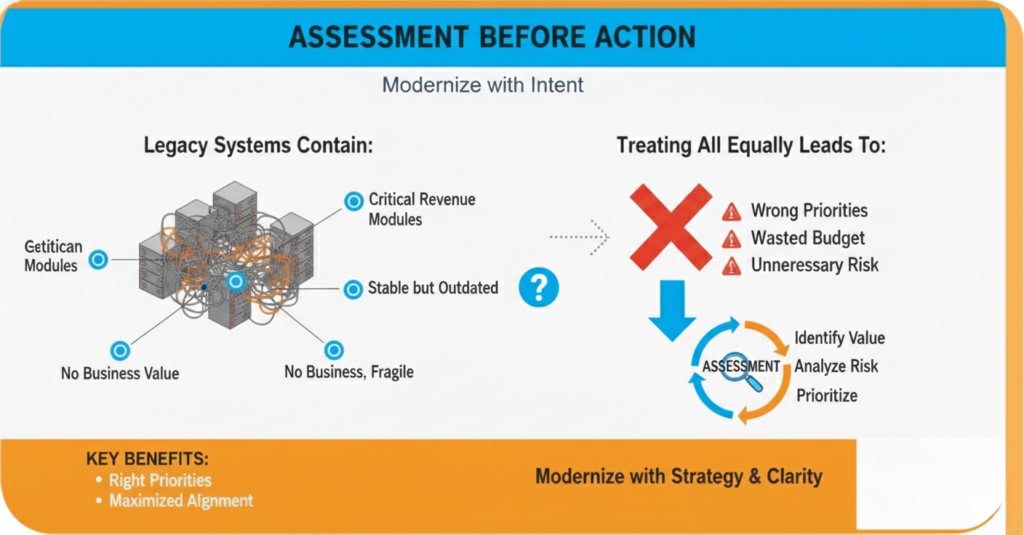
Legacy systems usually contain:
Critical revenue‑generating modules
Stable but outdated components
High‑risk, fragile areas
Features that no longer add business value
Treating them all equally leads to:
Wrong priorities
Wasted budget
Unnecessary risk
Assessment helps you modernize with intent.
Key Dimensions of Legacy Assessment
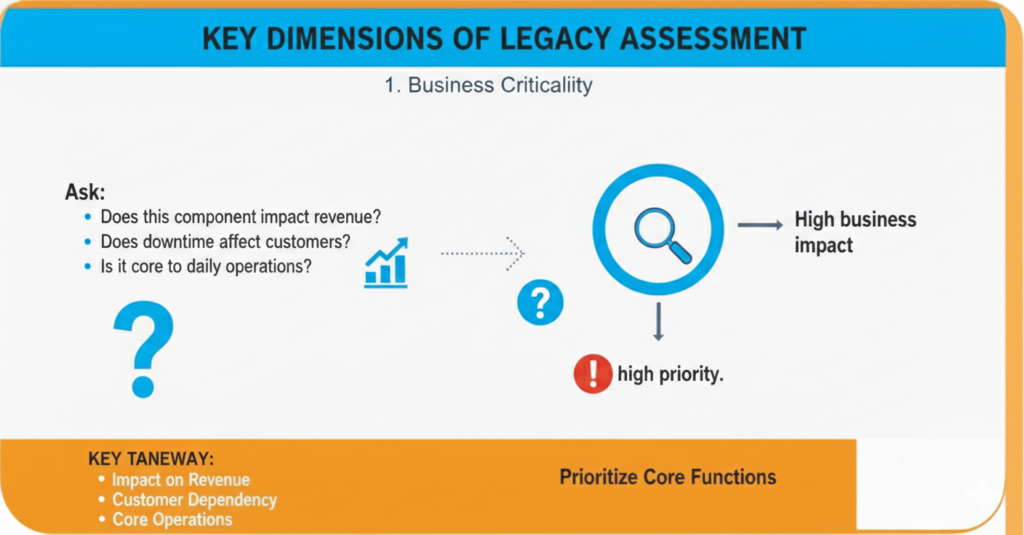
1. Business Criticality
Ask:
Does this component impact revenue?
Does downtime affect customers?
Is it core to daily operations?
👉 High business impact = high priority.
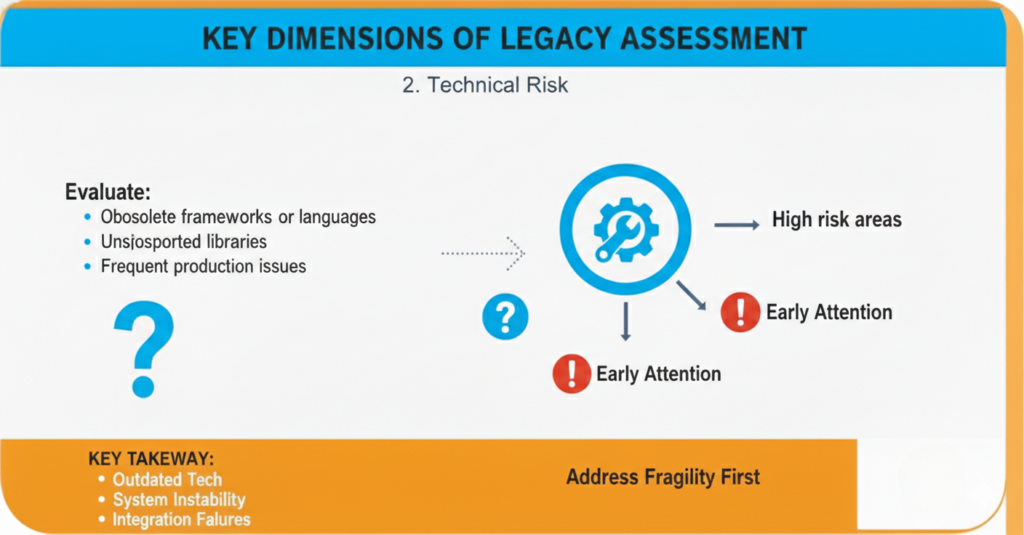
2. Technical Risk
Evaluate:
Obsolete frameworks or languages
Unsupported libraries
Fragile integrations
Frequent production issues
👉 High risk areas need early attention.
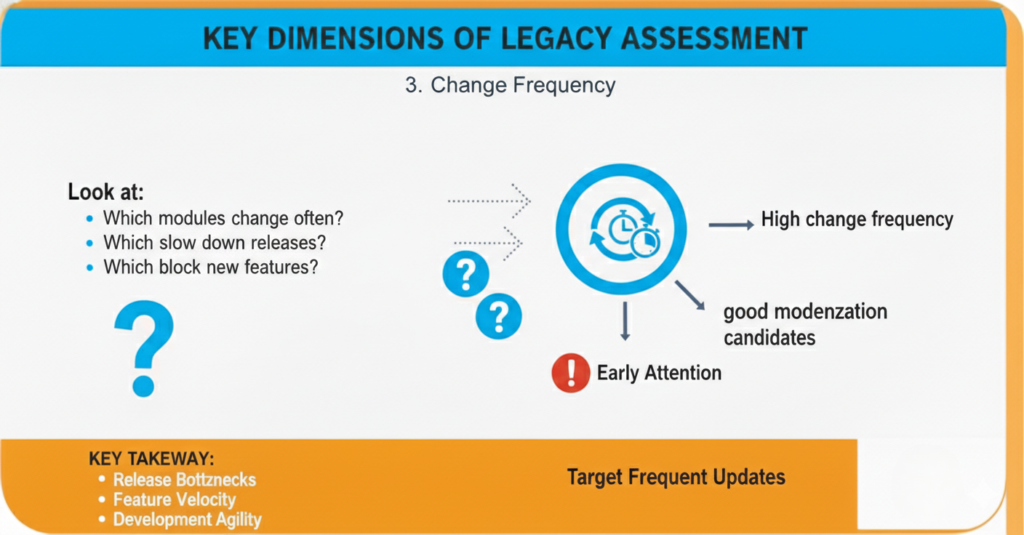
3. Change Frequency
Look at:
Which modules change often?
Which slow down releases?
Which block new features?
👉 High change frequency = good modernization candidates.
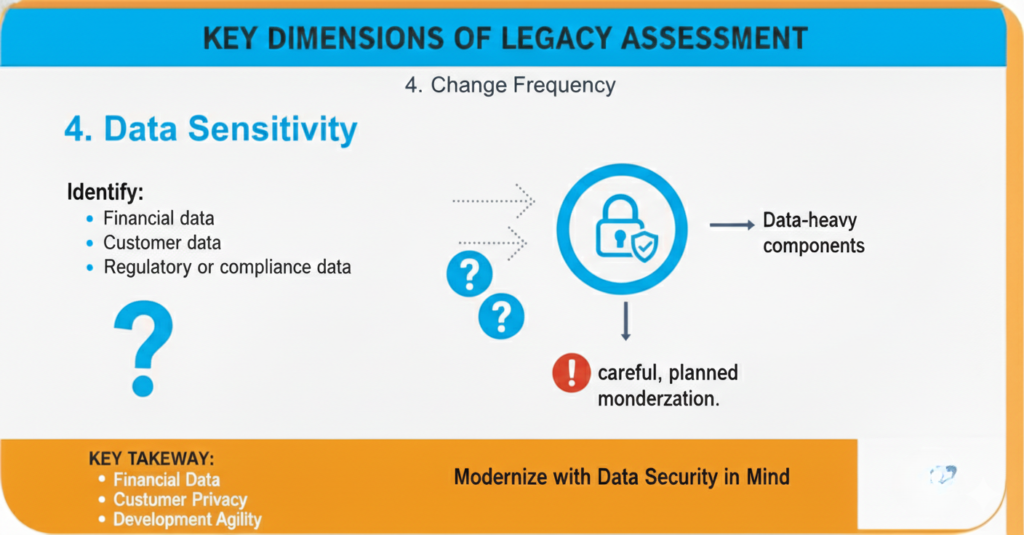
4. Data Sensitivity
Identify:
Financial data
Customer data
Regulatory or compliance data
👉 Data‑heavy components require careful, planned modernization.
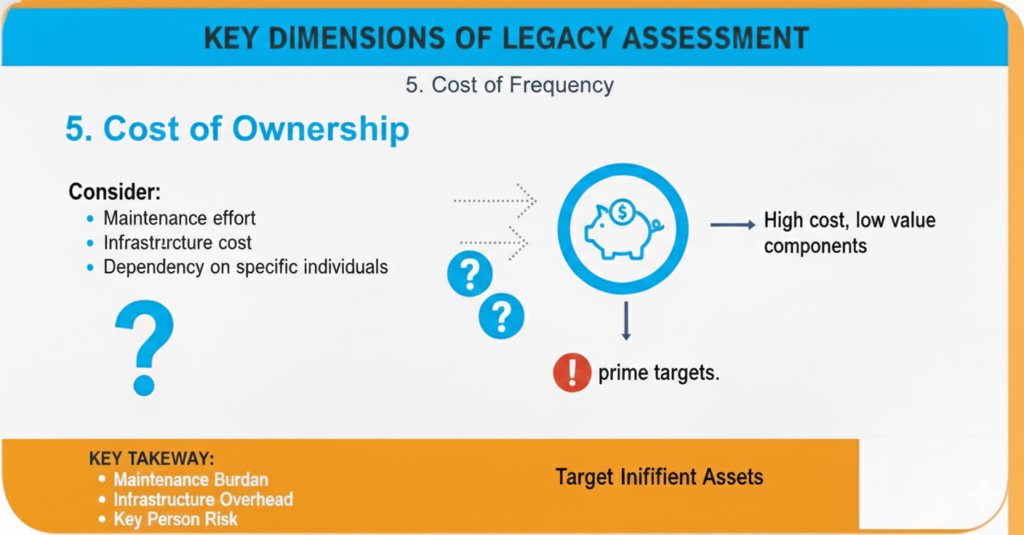
5. Cost of Ownership
Consider:
Maintenance effort
Infrastructure cost
Dependency on specific individuals
👉 High cost, low value components are prime targets.
Modernization Is a Prioritization Exercise
Not all components should be:
Rewritten
Re‑engineered
Cloud‑migrated
Some should be:
Left alone (for now)
Isolated
Wrapped with APIs
Gradually replaced
Assessment prevents over‑engineering.
SOAR’s Assessment‑First Approach
At SOAR Technologies, we start modernization by:
Mapping business workflows to system components
Scoring modules by risk, value, and effort
Identifying quick wins vs strategic investments
This creates a modernization backlog instead of a guessing game.
What You Get After a Proper Assessment
✔ Clear modernization priorities
✔ Reduced risk
✔ Better budget control
✔ Phased execution roadmap
Modernization becomes predictable, not emotional.
Who This Blog Is For
This blog is for:
Leaders unsure where to start
Teams overwhelmed by legacy complexity
Businesses afraid of modernization failure